
Ti-6242 Titanium Rod: High-Temperature Aerospace Alloy Overview
Ti-6242 Titanium Rod: High-Temperature Aerospace Alloy Overview
Introduction
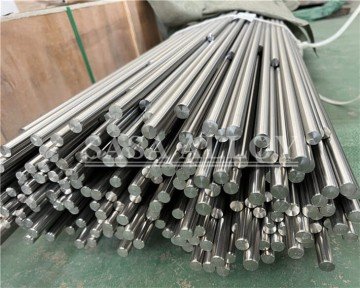
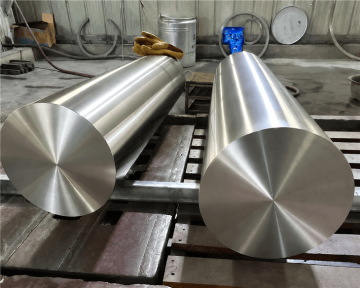
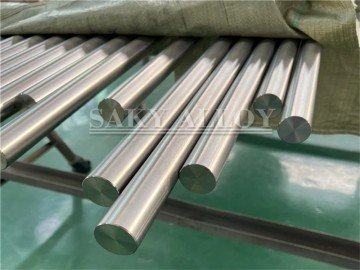
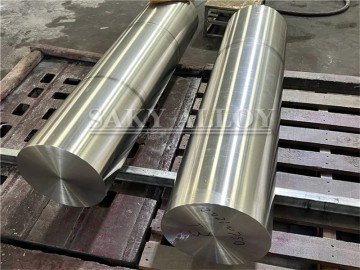
Ti-6242 Titanium Rod is a high-temperature near-alpha titanium alloy rod used when aerospace and advanced engineering components need better elevated-temperature strength, creep resistance and thermal stability than many general-purpose titanium alloys. It is commonly described as Ti-6Al-2Sn-4Zr-2Mo and is often associated with UNS R54620. Buyers specify it for compressor components, engine-adjacent parts, high-temperature structural rods, fastener stock and precision machined aerospace hardware.
Key Takeaways: Ti-6242 is selected for heat resistance and strength retention, not for low-cost general fabrication. It offers a stronger high-temperature profile than commercially pure titanium and many Ti-6Al-4V applications, but it requires stricter control of chemistry, heat treatment, ultrasonic inspection, surface condition and certification. RFQs should state alloy name, UNS designation, diameter, length, condition, applicable aerospace or project specification, MTC requirement and inspection scope.
SAKY ALLOY supplies titanium rods, titanium bars, titanium plates, titanium tubes, titanium wires and customized titanium alloy materials for aerospace, chemical processing, marine, medical and industrial applications. For special titanium alloys such as Ti-6242, material traceability, EN 10204 3.1 MTC, PMI testing, UT testing, third-party inspection and export packaging can be arranged according to order requirements.
What Is Ti-6242 Titanium Rod?
Ti-6242 titanium rod is a near-alpha titanium alloy product with aluminum, tin, zirconium and molybdenum as major alloying elements. The common composition name Ti-6Al-2Sn-4Zr-2Mo describes its nominal alloy balance: approximately 6% aluminum, 2% tin, 4% zirconium and 2% molybdenum. Some project specifications may also include a small silicon addition, often described as Ti-6242S. Buyers should not assume Ti-6242 and Ti-6242S are identical without checking the purchase specification.
In aerospace material selection, Ti-6242 rod is normally used where Ti-6Al-4V may not offer enough elevated-temperature capability. It is not a commodity titanium rod. Production route, forging ratio, heat treatment, microstructure, grain size, inspection level and traceability can all affect final acceptance.
Product Data Table
| Item | Typical Details | Buyer Check Point |
|---|---|---|
| Product Name | Ti-6242 Titanium Rod / Ti-6Al-2Sn-4Zr-2Mo Rod | Confirm whether the order requires Ti-6242 or Ti-6242S. |
| UNS Reference | UNS R54620 is commonly referenced for Ti-6242 family material. | UNS alone is not enough; confirm full chemistry and project specification. |
| Product Form | Round rod, forged bar, machined bar, billet or custom cut length | State diameter, length, tolerance, surface and end condition. |
| Condition | Annealed, solution treated and aged, or project-defined condition | Mechanical properties depend strongly on heat treatment. |
| Main Application | Aerospace engine and high-temperature machined components | Confirm operating temperature, load, fatigue and inspection requirements. |
Chemical Composition
The alloy design of Ti-6242 rod is based on high-temperature strength retention. Aluminum supports alpha phase strengthening, tin and zirconium improve high-temperature performance, and molybdenum contributes beta stabilization and strength control. In specifications where silicon is included, it can improve creep resistance in typical high-temperature alloy design, but the exact silicon requirement must be taken from the customer’s material specification.
| Alloy | Al | Sn | Zr | Mo | Si | Ti | Technical Note |
|---|---|---|---|---|---|---|---|
| Ti-6242 | About 6% | About 2% | About 4% | About 2% | By specification | Balance | Near-alpha titanium alloy for elevated-temperature service. |
| Ti-6242S | About 6% | About 2% | About 4% | About 2% | Small controlled addition | Balance | Used where project specification calls for silicon-bearing variant. |
The values above describe the nominal alloy logic. Final chemical composition must follow the buyer’s aerospace, AMS, company or project specification. For critical aerospace applications, the MTC should show actual heat chemistry, heat number, melting route where required, and full traceability.
Mechanical Properties
Ti-6242 titanium rod is selected for strength retention and stability at elevated temperature. Mechanical properties depend on bar diameter, working history, heat treatment, microstructure and inspection class. According to typical aerospace material practice, strength data must be certified by the actual heat and product lot rather than taken only from handbook values.
| Property Item | Ti-6242 Titanium Rod | Engineering Relevance | Buyer Check |
|---|---|---|---|
| Tensile Strength | High-strength titanium alloy range, condition dependent. | Supports aerospace machined components under mechanical load. | Review actual tensile result on MTC. |
| Yield Strength | Controlled by heat treatment and microstructure. | Relevant to rotating parts, rods and load-bearing hardware. | Confirm minimum value required by project specification. |
| Creep Resistance | Better elevated-temperature capability than many general titanium alloys in suitable conditions. | Important for engine-adjacent and hot structural components. | Ask whether creep or stress-rupture data is required. |
| Ductility | Condition and diameter dependent. | Affects machining, forming allowance and service reliability. | Check elongation and reduction of area when specified. |
Applicable Standards
Ti-6242 rod is often purchased under aerospace or customer-controlled specifications rather than only a broad commercial titanium bar standard. Some buyers reference UNS R54620, while others specify AMS, OEM or project documents that define chemistry, heat treatment, mechanical testing, ultrasonic class and surface acceptance. If ASTM B348 is mentioned, it should not be treated as sufficient by itself unless the PO clearly defines Ti-6242 chemistry and acceptance criteria.
| Material | Common Designation | UNS Reference | Specification Approach | Certificate Focus |
|---|---|---|---|---|
| Ti-6242 Rod | Ti-6Al-2Sn-4Zr-2Mo | R54620 reference commonly used | Aerospace / customer specification should be confirmed on PO. | Chemistry, heat treatment, mechanical properties, UT, heat number. |
| Ti-6Al-4V Rod | Grade 5 / Ti-64 | R56400 | ASTM B348 and AMS specifications are commonly used by application. | Grade, chemistry, tensile values, microstructure where specified. |
| Ti-6246 Rod | Ti-6Al-2Sn-4Zr-6Mo | Project-specific reference | Used when higher beta stabilization is required by design. | Composition, heat treatment and mechanical values. |
Quality Testing and Material Traceability
Ti-6242 titanium rod is typically purchased for critical components, so traceability must be controlled from melt source to final cut length. The heat number on the rod, certificate, label and packing list should match. For aerospace-related procurement, buyers may also require approved melting route, ultrasonic inspection, macrostructure or microstructure review, surface defect control and third-party witness inspection.
| Inspection Item | Purpose | Buyer Check |
|---|---|---|
| EN 10204 3.1 MTC | Confirms chemistry, heat number, condition and mechanical results. | Check Al, Sn, Zr, Mo and Si requirement against PO. |
| PMI Testing | Confirms alloy identity before shipment or machining. | Useful to avoid grade mix with Ti-64 or other titanium rods. |
| Ultrasonic Testing | Detects internal discontinuities in bar stock. | Confirm UT class, acceptance level and report format. |
| Dimensional Inspection | Checks diameter, length, straightness and tolerance. | Important for CNC machining and aerospace component yield. |
| Third-party Inspection | Supports project acceptance and independent verification. | SGS, BV, TUV or customer-appointed inspection can be arranged. |
Comparison With Similar Materials
Ti-6242 titanium rod is often compared with Ti-6Al-4V, Ti-6246, Ti-834 and nickel-based superalloys. The correct material depends on operating temperature, stress level, fatigue requirement, oxidation exposure, weight target and certification route. Ti-6242 sits between general titanium alloys and more specialized high-temperature titanium or nickel alloy materials.
| Material | Main Strength | Limitation | Best-Use Recommendation |
|---|---|---|---|
| Ti-6242 Rod | High-temperature strength retention and creep resistance. | Higher cost and stricter certification than general titanium rods. | Aerospace engine-adjacent and hot structural components. |
| Ti-6Al-4V Rod | Widely available, strong, well understood and versatile. | Less suitable for higher-temperature requirements than Ti-6242 in many designs. | General aerospace, medical, marine and machined components. |
| Ti-6246 Rod | Higher beta stabilization and high-strength potential. | More specialized processing and specification control. | Applications requiring a different strength and heat treatment balance. |
| Nickel-Based Superalloy | Very strong high-temperature capability. | Much higher density than titanium alloys. | Hotter engine zones where titanium temperature capability is not enough. |
Industrial Applications
Ti-6242 titanium rod is mainly used in aerospace and high-performance engineering applications where weight reduction and elevated-temperature performance are required together. It is not usually selected for simple corrosion-resistant use, where commercially pure titanium or Ti-6Al-4V may be more economical.
| Application Scenario | Traditional Option | Ti-6242 Recommendation | Technical Reason |
|---|---|---|---|
| Compressor Components | Ti-6Al-4V or stainless alloy by design | Ti-6242 rod for machined parts | Better elevated-temperature strength retention. |
| Aerospace Fastener Stock | Ti-6Al-4V fastener bar | Ti-6242 where heat exposure requires it | Improved performance in hotter service zones. |
| Hot Structural Components | Stainless steel or Ti-64 | Ti-6242 with required inspection | Weight saving with stronger high-temperature alloy design. |
| Precision Machined Aerospace Rod Parts | General titanium bar | Ti-6242 when specification requires elevated-temperature capability | Controlled chemistry, UT and traceability support critical use. |
Material Selection Steps
✅ Confirm whether Ti-6242 or Ti-6242S is required by the drawing or engineering specification.
✅ Specify diameter, length, tolerance, surface condition and machining allowance.
✅ Define heat treatment, mechanical property limits, UT requirement and microstructure requirement before production.
✅ Request full MTC with heat number, chemistry, mechanical values and inspection results.
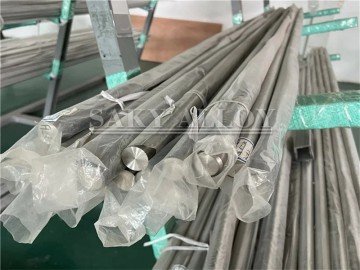
✅ Confirm export packing, marking and traceability transfer for cut lengths.
Why Choose Ti-6242 Titanium Rod?
Ti-6242 titanium rod is chosen when weight, heat resistance and strength retention must be balanced. Its near-alpha alloy design gives it stronger elevated-temperature relevance than many general titanium rods, while keeping the density advantage of titanium over nickel-based alloys. For aerospace and high-performance engineering, this balance can reduce component weight while maintaining service reliability under thermal load.
The limitation is procurement complexity. Ti-6242 requires controlled specification, appropriate heat treatment, confirmed microstructure where required and reliable inspection documentation. Buyers should avoid vague requests such as “high-temperature titanium rod” and instead provide a full technical RFQ.
FAQ
What is Ti-6242 titanium rod?
Ti-6242 titanium rod is a near-alpha titanium alloy rod commonly described as Ti-6Al-2Sn-4Zr-2Mo. It is selected for elevated-temperature aerospace and high-performance engineering applications.
What is the difference between Ti-6242 and Ti-6Al-4V?
Ti-6Al-4V is a widely used general titanium alloy. Ti-6242 is designed for better high-temperature strength retention and creep resistance, making it more suitable for hotter aerospace service zones when specified by engineering design.
Is Ti-6242 the same as Ti-6242S?
Not automatically. Ti-6242S normally indicates a silicon-bearing variant. The buyer should confirm the exact chemistry, silicon requirement and applicable specification before approving substitution.
What certificates should be requested for Ti-6242 rod?
Buyers should request EN 10204 3.1 MTC, heat number traceability, chemical composition, mechanical properties, heat treatment record, ultrasonic testing report, dimensional inspection and third-party inspection where required.
What should be included in a Ti-6242 titanium rod RFQ?
Include alloy name, UNS reference, applicable specification, diameter, length, quantity, condition, heat treatment, surface finish, tolerance, UT requirement, certificate type, packing method and destination port.
Related Product Links
| Related Product | Common Grades | Application |
|---|---|---|
| Titanium Bar | Grade 2, Grade 5, Grade 7, Grade 12, Ti-6242 | Machining, fasteners, aerospace parts and industrial components. |
| Titanium Plate | Grade 2, Grade 5, Grade 7, Grade 12 | Chemical equipment, aerospace panels, marine and heat exchanger parts. |
| Titanium Wire | Grade 1, Grade 2, Grade 5 | Welding, mesh, springs, medical and precision components. |
Conclusion
Ti-6242 titanium rod is a specialist aerospace alloy for high-temperature strength retention, creep resistance and weight-sensitive component design. Its value appears when general titanium alloys cannot meet the thermal and mechanical requirements of the application. Correct procurement depends on exact chemistry, specification, condition, UT level, MTC review and traceability control.
Call To Action
Contact SAKY ALLOY for Ti-6242 titanium rod quotation, MTC review, PMI testing, ultrasonic testing, customized diameter, cut length, surface finish, export packaging and delivery support.
Send your alloy designation, UNS reference, specification, diameter, length, quantity, condition, heat treatment, UT requirement, certificate type and destination port. Our technical team can help verify the material requirement and prepare a suitable titanium rod supply plan.