
Titanium Alloy Grade Cross-Reference: ASTM, UNS and Chinese Standards
Introduction
Titanium alloy grade cross-reference is the process of comparing material designations used by ASTM product specifications, the Unified Numbering System (UNS), Chinese GB standards and common commercial alloy names. It helps engineers and buyers identify whether two designations describe the same nominal alloy family and what additional specification checks are required before substitution.
A cross-reference table should not be treated as automatic approval to replace one grade with another. ASTM Grade 5, UNS R56400 and Chinese TC4 all refer to the Ti-6Al-4V alloy family, but an acceptable purchase still depends on the applicable product standard, chemical limits, mechanical properties, heat-treatment condition, dimensions, inspection requirements and certificate content. Commercially pure titanium grades require even greater care because oxygen and iron limits influence strength and ductility.
Key Takeaways
- ASTM grade, UNS number and Chinese designation serve different identification purposes.
- A matching nominal composition does not prove compliance with the required product specification.
- ASTM B265, B348, B338, B381, B861 and B862 apply to different titanium product forms.
- Chinese TA and TC grades should be verified against the applicable edition of GB/T 3620.1 and the relevant product standard.
- The purchase order and MTC should identify grade, product standard, heat number, condition and actual test results.
How ASTM, UNS and Chinese Grade Systems Differ
ASTM Grade Numbers
ASTM titanium grades are defined within individual product specifications. The same grade number may appear in standards for plate, bar, tube, pipe, forgings or fittings, but each standard controls a particular product form and its associated dimensions, properties and testing.
For example, Grade 2 titanium plate may be ordered to ASTM B265, while Grade 2 bar may be ordered to ASTM B348. A certificate stating only “Grade 2 titanium” is incomplete if the required product specification is not identified.
UNS Numbers
The Unified Numbering System assigns a unique alphanumeric identifier to a material composition. Titanium UNS designations begin with the letter R. Common examples include R50400 for Grade 2, R56400 for Grade 5 and R56407 for Grade 23.
A UNS number identifies a material chemistry family but is not a complete product order. It does not replace the ASTM specification, dimensions, temper or heat-treatment condition, mechanical-property requirements or inspection plan.
Chinese Titanium Designations
Chinese titanium and titanium-alloy designations are defined through GB standards, including GB/T 3620.1 for alloy designations and chemical composition. Common commercial references include TA grades for commercially pure or alpha-type titanium materials and TC grades for alpha-beta titanium alloys.
Chinese standards have been revised over time, and some commercially pure titanium designation relationships changed between editions. A buyer should therefore identify the exact standard number and edition rather than relying only on an older comparison chart.
Titanium Alloy Grade Cross-Reference Table
The following table provides practical procurement references for frequently requested titanium grades. Entries marked as approximate or commonly compared require confirmation against the applicable chemical-composition and product standards.
| ASTM Grade | UNS | Nominal Material | Common Chinese Reference | Cross-Reference Status |
|---|---|---|---|---|
| Grade 1 | R50250 | Commercially pure titanium, lowest strength and highest ductility among common CP grades | TA1 is commonly compared | Approximate comparison; verify oxygen, iron and tensile-property limits |
| Grade 2 | R50400 | Commercially pure titanium with moderate strength and good formability | TA2 is commonly compared | Approximate comparison; confirm the current GB edition and product standard |
| Grade 3 | R50550 | Higher-strength commercially pure titanium | TA3 is commonly compared | Approximate comparison; chemistry and mechanical limits require review |
| Grade 4 | R50700 | Highest-strength common commercially pure ASTM titanium grade | TA4 may be used as a comparison in current Chinese grade systems | Verify chemistry, oxygen limit, product form and tensile requirements |
| Grade 5 | R56400 | Ti-6Al-4V | TC4 | Same nominal alloy family; final equivalence depends on specification, condition and properties |
| Grade 7 | R52400 | Commercially pure titanium with palladium addition | TA9 is commonly compared | Verify palladium range, CP base grade and product requirements |
| Grade 9 | R56320 | Ti-3Al-2.5V | TA18 is commonly compared | Same nominal alloy family; verify interstitial limits and mechanical condition |
| Grade 11 | R52250 | Grade 1-type commercially pure titanium with palladium addition | No substitution should be assumed from a generic TA reference | Use chemistry-based verification |
| Grade 12 | R53400 | Ti-0.3Mo-0.8Ni nominal alloy family | TA10 is commonly compared | Verify molybdenum, nickel, interstitials and mechanical requirements |
| Grade 23 | R56407 | Ti-6Al-4V ELI | TC4 ELI or low-interstitial TC4 may be commercially referenced | Not interchangeable without checking ELI chemistry, properties and application standard |
Cross-reference warning: Chinese and ASTM grades may share a nominal alloy description while using different impurity limits, mechanical-property requirements, sampling rules or heat-treatment conditions. The buyer should approve substitution only after comparing the complete standards and actual MTC values.
ASTM Standard Scope by Titanium Product Form
Titanium grade identification must be combined with a product-form specification. Ordering Grade 5 without stating whether the material is plate, bar, tube, pipe or forging leaves important dimensional, property and inspection requirements undefined.
| ASTM Standard | Primary Product Scope | Typical Buyer Checks |
|---|---|---|
| ASTM B265 | Titanium and titanium-alloy strip, sheet and plate | Grade, thickness, dimensions, surface, flatness and tensile properties |
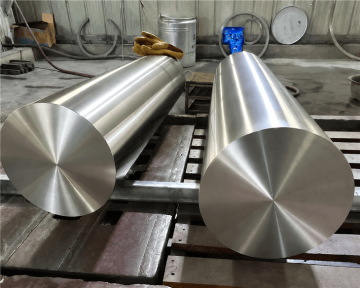
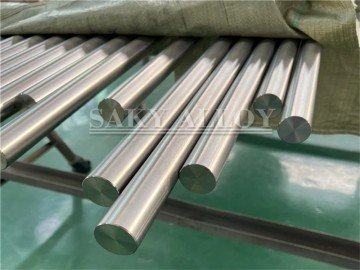
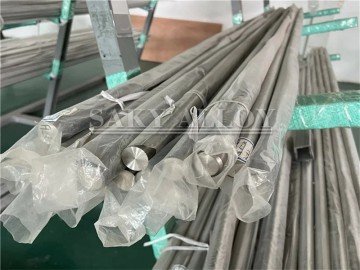
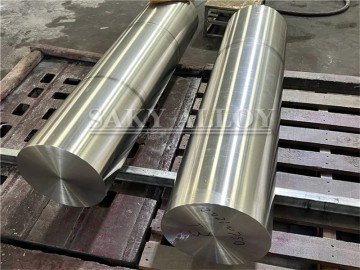
| ASTM B348 | Titanium and titanium-alloy bars and billets | Diameter or section, condition, finish, tolerance and mechanical properties |
| ASTM B338 | Seamless and welded titanium tubes for condensers and heat exchangers | OD, wall, length, manufacturing method, testing and tube condition |
| ASTM B381 | Titanium and titanium-alloy forgings | Grade, forging configuration, condition, tests and machining allowance |
| ASTM B861 | Titanium and titanium-alloy seamless pipe | Grade, OD, wall, schedule, length, heat treatment and testing |
| ASTM B862 | Titanium and titanium-alloy welded pipe | Welding route, dimensions, heat treatment, examination and pressure requirements |
| ASTM B363 | Seamless and welded titanium fittings | Fitting type, dimensions, grade, manufacturing route and inspection |
Medical and aerospace applications may require specifications outside the general industrial ASTM B-series. For example, Grade 23 material intended for surgical implant applications may require ASTM F136 rather than acceptance only to a general bar or plate specification. The application standard must therefore be stated separately.
Certificate Checklist for Titanium Orders
The Mill Test Certificate should allow the buyer to trace the delivered material to its heat or lot and evaluate compliance with the purchase specification. Certificate review should be completed before material enters fabrication.
| Certificate Item | What to Verify | Common Risk |
|---|---|---|
| Material designation | ASTM grade, UNS number and requested Chinese or international designation | Trade name shown without the formal grade |
| Product specification | Correct ASTM, ASME, GB or project standard for the delivered form | Plate standard used for bar or pipe documentation |
| Standard edition | Edition required by the purchase order or project | Certificate references an unapproved edition |
| Heat or lot number | Certificate number matches material and package markings | Traceability lost after cutting or repacking |
| Chemical composition | All required alloying and interstitial elements are reported | Only major alloying elements are shown |
| Mechanical properties | Tensile strength, yield strength and elongation meet the product specification | Typical handbook values replace actual test results |
| Delivery condition | Annealed, solution treated, aged or other required condition | Grade is correct but heat-treatment condition is not stated |
| Additional tests | UT, PMI, flattening, pressure, corrosion or other required reports | Tests are assumed to be included but were not ordered |
| Certificate type | MTC or EN 10204 3.1 documentation as contractually required | Generic certificate supplied instead of specific inspection results |
PMI and Laboratory Chemical Analysis
Positive Material Identification can support alloy verification by detecting major alloying elements. It is useful for distinguishing Ti-6Al-4V from commercially pure titanium or identifying molybdenum-, nickel- or palladium-bearing grades when the instrument and method are suitable.
PMI does not replace complete laboratory chemical analysis. Interstitial elements such as oxygen, nitrogen, hydrogen and carbon are important to titanium properties and may not be fully verified by routine handheld PMI equipment. Compliance should be based on the applicable specification and MTC, supported by additional testing when required.
Common Buyer Mistakes
- ✅ Treating TC4, Grade 5 and UNS R56400 as a complete purchasing specification.
- ✅ Ordering Grade 2 without identifying whether the product is plate, bar, tube or pipe.
- ✅ Using an old Chinese grade comparison without checking the current GB standard edition.
- ✅ Assuming Grade 23 and general Grade 5 can be substituted in implant-related applications.
- ✅ Confusing UNS R53400 Grade 12 with UNS R56400 Grade 5.
- ✅ Accepting a nominal alloy description without reviewing oxygen, iron, hydrogen and other controlled elements.
- ✅ Requesting EN 10204 3.1 only after the material has been produced or allocated.
- ✅ Relying on PMI alone to prove full titanium chemistry compliance.
- ✅ Approving substitute material before reviewing condition, properties and applicable design requirements.
Titanium Specification Checklist
A complete titanium RFQ or purchase order should state:
- ASTM grade and UNS number
- Chinese grade or other cross-reference, when required
- Applicable ASTM, ASME, GB, AMS or project specification
- Required standard edition
- Product form: plate, bar, tube, pipe, forging, fitting, wire or coil
- Dimensions, tolerances and finished length
- Annealed, solution-treated, aged or other delivery condition
- Surface finish and machining allowance
- Chemical and mechanical-property requirements
- MTC or EN 10204 3.1 certificate requirement
- PMI, UT, pressure testing or third-party inspection scope
- Heat-number marking and traceability method
- Packing, destination and required delivery documentation
Related Titanium Products
The following SAKY ALLOY pages provide product-form information for titanium specification review:
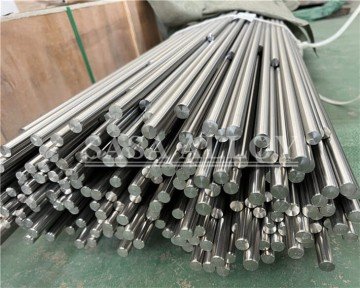
- Titanium Bar for commercially pure and alloyed titanium bar grades.
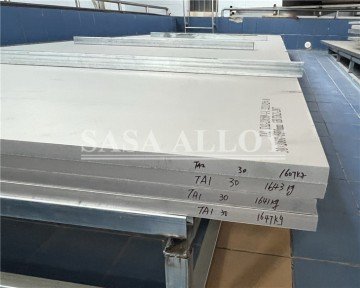
- Titanium Plate and Sheet for ASTM B265 flat-product requirements.
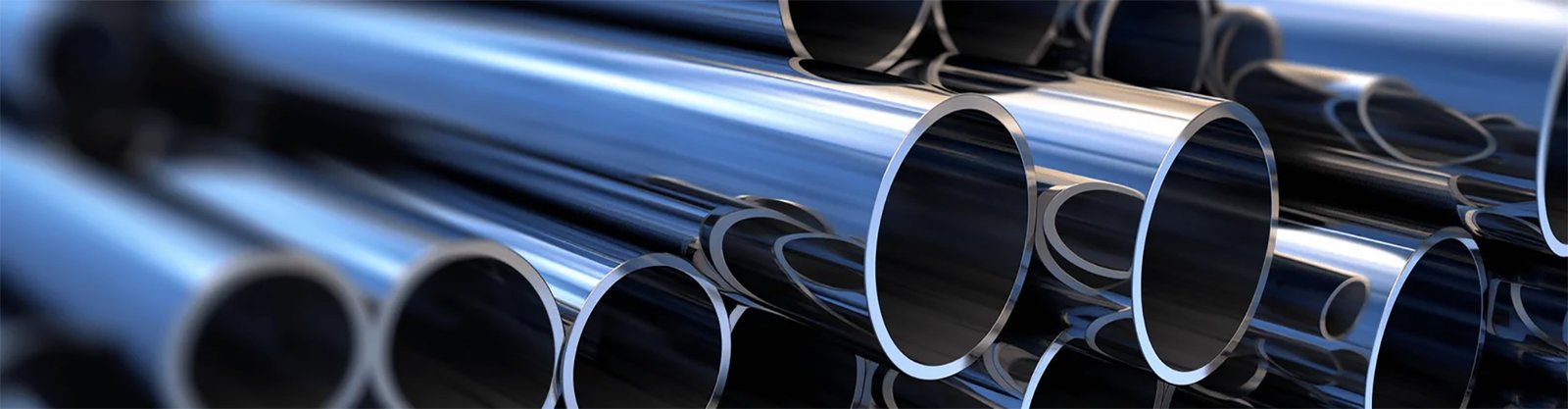
- Titanium Pipe and Tube for seamless, welded and heat-exchanger product forms.
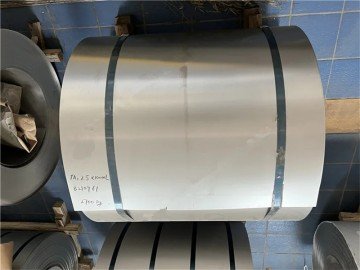
- Titanium Coil and Strip for rolled titanium coil and strip requirements.
- Titanium Forgings for blocks and forged titanium components.
- SAKY ALLOY Titanium Products for additional titanium grades and product forms.
Frequently Asked Questions
Are ASTM Grade 5, UNS R56400 and TC4 the same material?
They refer to the same nominal Ti-6Al-4V alloy family. They should not be accepted as automatically interchangeable until the applicable ASTM or GB specification, chemical limits, mechanical properties, heat-treatment condition and product form have been compared.
What is the UNS number for Titanium Grade 2?
The UNS designation for ASTM Grade 2 titanium is R50400. A complete order should also identify the product specification, such as ASTM B265 for plate or ASTM B348 for bar.
Is Chinese TA2 exactly equivalent to ASTM Grade 2?
TA2 is commonly compared with ASTM Grade 2 because both are commercially pure titanium grades with moderate strength. Exact substitution requires comparison of the applicable GB and ASTM editions, chemical limits, product-form requirements and actual MTC results.
What is the difference between Grade 5 and Grade 23 titanium?
Both belong to the Ti-6Al-4V family, but Grade 23 is the extra-low-interstitial version identified as UNS R56407. Grade 23 has tighter limits on selected interstitial elements and may be required by application-specific standards such as ASTM F136.
Which standard applies to titanium bar?
ASTM B348 is a common specification for titanium and titanium-alloy bars and billets. Aerospace, medical or project-specific applications may require an additional AMS, ASTM F-series or customer specification.
What should be checked on a titanium MTC?
Check the grade, UNS number, product specification, edition, heat number, dimensions, delivery condition, chemical composition, mechanical properties and required supplementary tests. The certificate information should match the markings on the delivered material and packages.
Request a Downloadable Titanium Specification Checklist
A titanium cross-reference should be used as the beginning of a specification review, not as final substitution approval. Send SAKY ALLOY the ASTM grade, UNS number, Chinese designation, product form, required standard, dimensions, condition, certificates and inspection requirements. The technical team can review the requested designations and prepare a downloadable specification checklist for the inquiry.