
Titanium Bar Annealing Process Explained
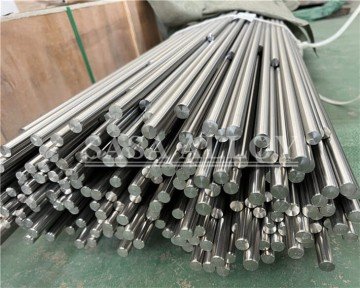
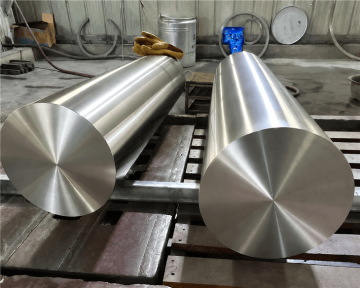
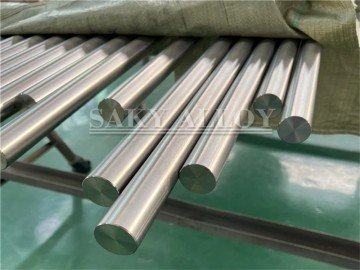
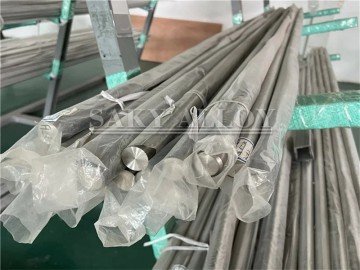
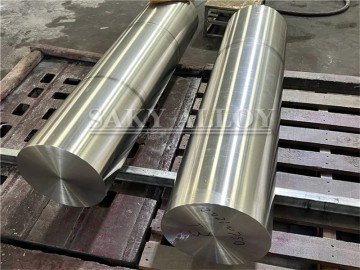
Titanium is a widely used engineering metal known for its high strength, lightweight nature, and excellent corrosion resistance. However, in order to maximize its mechanical performance and ensure ease of fabrication, annealing is an essential heat treatment step in the production of titanium bars.
In this article, we’ll explain the titanium bar annealing process in detail, covering why it’s necessary, how it’s done, the various types of annealing, and the benefits it provides. Whether you’re sourcing materials for aerospace, medical, marine, or industrial applications, understanding annealing is critical to choosing the right titanium product for your needs.
1. What Is Annealing?
Annealing is a heat treatment process designed to alter the physical and sometimes chemical properties of a metal. For titanium bars, annealing is used to:
-
Relieve internal stresses
-
Improve ductility
-
Refine grain structure
-
Enhance machinability and formability
-
Restore mechanical properties after cold work
Titanium bars are often cold-drawn or forged during processing, leading to work hardening. Annealing reverses this effect, making the bars easier to machine, bend, or weld.
2. Why Is Annealing Necessary for Titanium Bars?
Titanium exhibits strong resistance to deformation, especially after mechanical processing. If left untreated, titanium bars may become:
-
Brittle
-
Difficult to machine
-
Prone to cracking during fabrication
Annealing is therefore necessary to:
-
Improve dimensional stability
-
Enhance mechanical consistency
-
Achieve required microstructure
-
Maintain surface and internal quality
At sakyalloy, we ensure each batch of titanium bars is annealed under tightly controlled conditions for optimal performance.
3. The Annealing Process: Step-by-Step
Step 1: Preparation
-
Titanium bars are cleaned and inspected prior to annealing.
-
Any surface contaminants such as oil or oxide layers are removed to prevent contamination at high temperatures.
Step 2: Heating
-
Bars are slowly heated to the annealing temperature range of 650°C to 760°C (for most titanium alloys like Grade 2 or Ti-6Al-4V).
-
The heating is done in a vacuum furnace or inert atmosphere (argon) to prevent oxidation or contamination.
Step 3: Soaking
-
The bars are held (soaked) at the target temperature for a specific duration, usually 30 to 60 minutes, depending on diameter and alloy.
-
This allows sufficient time for stress relief and recrystallization.
Step 4: Cooling
-
The titanium bars are then cooled under controlled conditions, typically in air, inert gas, or a vacuum environment.
-
Slow cooling is preferred to avoid the formation of internal stresses.
4. Types of Annealing for Titanium Bars
a) Stress Relief Annealing
-
Performed at 480°C to 650°C
-
Used to remove internal stresses caused by machining or forming
-
Maintains most of the mechanical strength
b) Recrystallization Annealing
-
Performed at 700°C to 800°C
-
Refines grain structure and restores ductility
-
Useful after significant cold working
c) Beta Annealing
-
Performed above the beta-transus temperature (~950°C for Ti-6Al-4V)
-
Produces a coarser grain structure
-
Used in aerospace components for specific toughness and fatigue resistance
At sakyalloy, we apply the appropriate annealing method based on alloy grade, product form, and customer requirements.
5. Effects of Annealing on Titanium Bar Properties
| Property | Before Annealing | After Annealing |
|---|---|---|
| Hardness | High (work-hardened) | Lower and uniform |
| Ductility | Reduced | Significantly improved |
| Tensile Strength | Elevated but brittle | Balanced and stable |
| Machinability | Difficult | Easier |
| Microstructure | Deformed grains | Recrystallized grains |
| Residual Stresses | High | Relieved |
These transformations are especially critical in industries where performance and safety are non-negotiable.
6. Titanium Grades and Their Annealing Needs
-
Grade 2 (CP Titanium): Requires low-temperature annealing for optimal ductility and corrosion resistance.
-
Grade 5 (Ti-6Al-4V): Often undergoes beta or recrystallization annealing for aerospace strength and fatigue resistance.
-
Grade 7: Requires inert gas environment to preserve corrosion-resistant properties.
-
Grade 23 (Ti-6Al-4V ELI): Special annealing conditions used for biocompatibility in medical implants.
sakyalloy supplies all major titanium grades, annealed to exacting standards per ASTM B348, AMS 4928, and ISO 5832-3.
7. Industry Standards for Titanium Annealing
Key standards followed during titanium bar annealing include:
-
ASTM B348: General specification for titanium and titanium alloy bars
-
AMS 4928: Aerospace-quality titanium bar and forgings
-
ASTM F136 / ISO 5832-3: Medical-grade titanium annealing standards
Our sakyalloy heat treatment facilities are calibrated and certified to maintain precise furnace temperatures and soak times in accordance with these standards.
8. Applications That Require Annealed Titanium Bars
Aerospace
-
Landing gear parts
-
Turbine shafts
-
Airframe components
Medical
-
Surgical implants
-
Bone screws and rods
-
Dental tools
Marine
-
Subsea fasteners
-
Corrosion-resistant shafts
-
Propulsion hardware
Industrial
-
Heat exchanger tubes
-
Chemical processing components
-
Structural support rods
In these fields, annealed titanium bars from sakyalloy ensure safe operation and ease of fabrication.
9. Annealing vs. Other Heat Treatments
| Process | Temperature Range | Purpose |
|---|---|---|
| Annealing | 650–800°C | Relieve stress, improve ductility |
| Solution Treating | 900–950°C | Dissolve alloying elements |
| Aging | 480–600°C | Precipitate hardening phases |
| Beta Annealing | >950°C | Improve fracture toughness |
Annealing is typically the first heat treatment before any further strengthening or aging process is applied.
10. Quality Assurance at sakyalloy
At sakyalloy, titanium bar annealing is conducted in advanced vacuum and inert atmosphere furnaces to guarantee:
-
No oxidation or contamination
-
Precise thermal cycles
-
Uniform mechanical properties
-
Full traceability and certification
Each batch is tested for:
-
Tensile strength and elongation
-
Hardness
-
Microstructure verification
-
Ultrasonic integrity (UT)
Certified according to EN 10204 3.1 or 3.2, our annealed bars are ready for critical applications.
Conclusion
Annealing is a vital heat treatment process that transforms titanium bars from hardened and brittle to ductile, stable, and performance-ready. It ensures machinability, formability, and long-term structural integrity across a wide range of industries.
With sakyalloy, you can count on precise annealing that meets international quality standards and supports your most demanding applications. Whether you’re building aircraft, developing surgical implants, or fabricating industrial systems, our titanium bars are engineered for success—every step of the way.