
Titanium Bar Composition and Properties
TITANIUM BAR COMPOSITION AND PROPERTIES
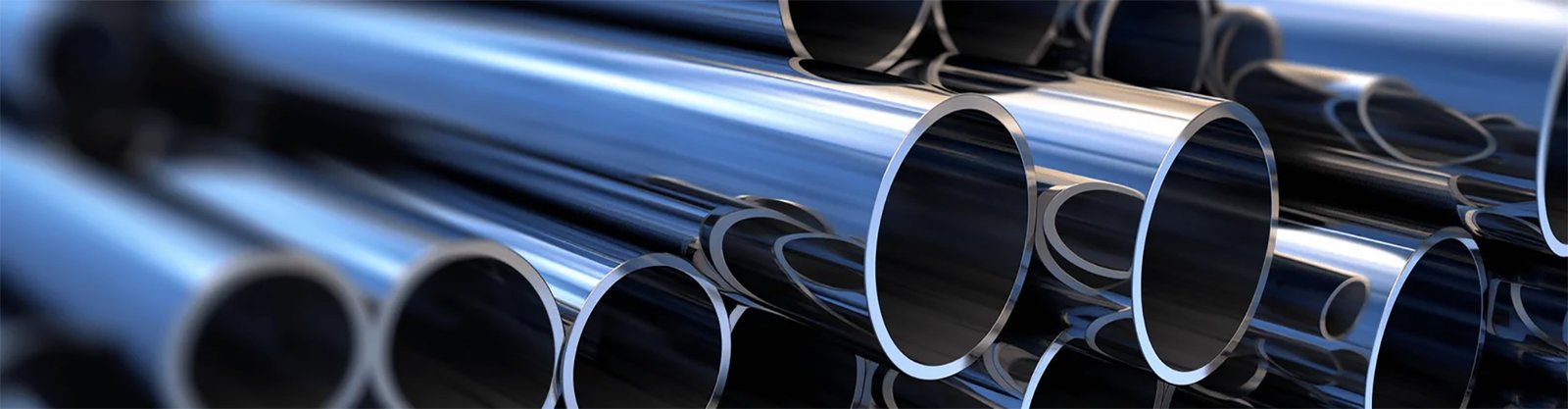
Titanium bar is one of the most important titanium alloy material forms used in aerospace, medical, marine, chemical processing, petrochemical, desalination, heat exchanger, power plant and high-end equipment manufacturing industries. Because titanium offers excellent corrosion resistance, high strength-to-weight ratio, good biocompatibility and reliable mechanical performance, titanium bars are widely used for shafts, fasteners, valve parts, medical implants, aerospace components, marine parts and precision machined products.
Understanding titanium bar composition and properties is very important for engineers, purchasing managers and industrial buyers. Different titanium grades, such as Grade 1, Grade 2, Grade 5 Ti-6Al-4V, Grade 7, Grade 9 Ti-3Al-2.5V, Grade 12 and Grade 23, have different chemical compositions, mechanical strengths and application advantages.
SAKY ALLOY supplies titanium bars, titanium round bars, titanium rods, titanium forged bars and customized titanium machining materials according to ASTM, ASME, AMS, EN, DIN, JIS, GB and customer specifications. Products can be supplied with chemical composition analysis, mechanical testing, PMI testing, UT testing, dimensional inspection, surface inspection, EN 10204 3.1 material certificate and full heat number traceability.
What Is Titanium Bar?
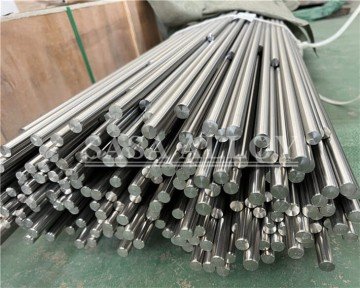
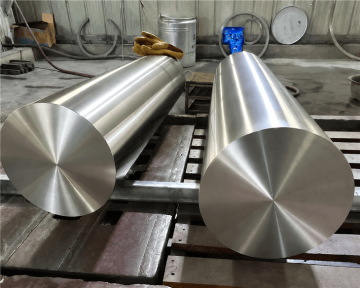
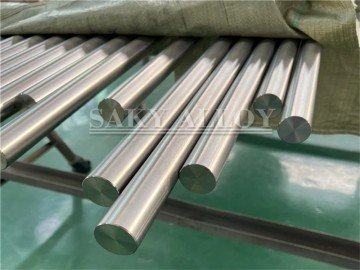
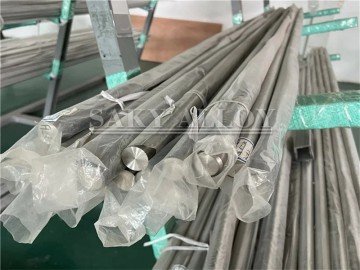
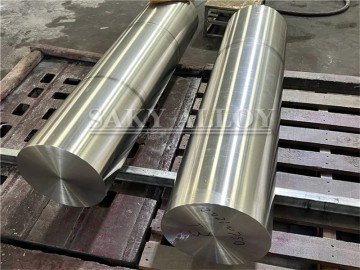
Titanium bar is a solid titanium material supplied in round, square, flat, hexagonal or forged bar form. Titanium round bar is the most commonly used form because it is suitable for turning, CNC machining, drilling, threading and manufacturing high-precision cylindrical parts.
Titanium bars can be made from commercially pure titanium or titanium alloy materials. Commercially pure titanium grades, such as Grade 1 and Grade 2, are mainly selected for corrosion resistance and formability. Titanium alloy grades, such as Grade 5 Ti-6Al-4V and Grade 23, are selected when higher strength, fatigue resistance and lightweight performance are required.
Common Titanium Bar Grades
| Grade | Common Name | Main Features | Typical Applications |
|---|---|---|---|
| Grade 1 | Commercially Pure Titanium | Highest ductility, excellent corrosion resistance | Chemical equipment, marine parts, plates and forming components |
| Grade 2 | Commercially Pure Titanium | Good strength, excellent corrosion resistance and weldability | Marine, chemical processing, heat exchangers, fasteners |
| Grade 5 | Ti-6Al-4V | High strength-to-weight ratio and good fatigue resistance | Aerospace parts, medical components, shafts, fasteners |
| Grade 7 | Ti-0.15Pd | Enhanced corrosion resistance with palladium addition | Chemical processing, acidic environments, chloride service |
| Grade 9 | Ti-3Al-2.5V | Medium strength, good formability and corrosion resistance | Aerospace tubing, sports equipment, industrial components |
| Grade 12 | Ti-0.3Mo-0.8Ni | Improved corrosion resistance and heat resistance | Chemical plants, heat exchangers, marine equipment |
| Grade 23 | Ti-6Al-4V ELI | High purity, excellent biocompatibility and toughness | Medical implants, surgical instruments, aerospace components |
Titanium Bar Chemical Composition
The chemical composition of titanium bar determines its corrosion resistance, strength, ductility, heat resistance and application performance. The following table shows typical composition ranges for common titanium bar grades. Final chemical composition should be confirmed according to the applicable standard and mill test certificate.
| Grade | Ti | Al | V | Pd | Mo | Ni | Fe | O | C | N | H |
|---|---|---|---|---|---|---|---|---|---|---|---|
| Grade 1 | Balance | – | – | – | – | – | ≤0.20 | ≤0.18 | ≤0.08 | ≤0.03 | ≤0.015 |
| Grade 2 | Balance | – | – | – | – | – | ≤0.30 | ≤0.25 | ≤0.08 | ≤0.03 | ≤0.015 |
| Grade 5 | Balance | 5.50 – 6.75 | 3.50 – 4.50 | – | – | – | ≤0.40 | ≤0.20 | ≤0.08 | ≤0.05 | ≤0.015 |
| Grade 7 | Balance | – | – | 0.12 – 0.25 | – | – | ≤0.30 | ≤0.25 | ≤0.08 | ≤0.03 | ≤0.015 |
| Grade 9 | Balance | 2.50 – 3.50 | 2.00 – 3.00 | – | – | – | ≤0.25 | ≤0.15 | ≤0.08 | ≤0.03 | ≤0.015 |
| Grade 12 | Balance | – | – | – | 0.20 – 0.40 | 0.60 – 0.90 | ≤0.30 | ≤0.25 | ≤0.08 | ≤0.03 | ≤0.015 |
| Grade 23 | Balance | 5.50 – 6.50 | 3.50 – 4.50 | – | – | – | ≤0.25 | ≤0.13 | ≤0.08 | ≤0.05 | ≤0.0125 |
Mechanical Properties of Titanium Bar
Mechanical properties vary depending on grade, production method, heat treatment condition and product size. Titanium alloy bars such as Grade 5 and Grade 23 offer much higher strength than commercially pure titanium grades, while Grade 1 and Grade 2 provide better ductility and corrosion resistance.
| Grade | Tensile Strength | Yield Strength | Elongation | Main Property |
|---|---|---|---|---|
| Grade 1 | 240 MPa min | 170 MPa min | 24% min | Highest ductility |
| Grade 2 | 345 MPa min | 275 MPa min | 20% min | Good balance of strength and corrosion resistance |
| Grade 5 | 895 MPa min | 825 MPa min | 10% min | High strength titanium alloy |
| Grade 7 | 345 MPa min | 275 MPa min | 20% min | Enhanced corrosion resistance |
| Grade 9 | 620 MPa min | 483 MPa min | 15% min | Medium strength and good formability |
| Grade 12 | 483 MPa min | 345 MPa min | 18% min | Improved corrosion and heat resistance |
| Grade 23 | 860 MPa min | 795 MPa min | 10% min | Medical-grade Ti-6Al-4V ELI |
Key Properties of Titanium Bar
1. Excellent Corrosion Resistance
Titanium forms a stable and protective oxide film on its surface, giving titanium bars excellent resistance to seawater, chlorides, many acids and industrial chemical environments. This property makes titanium bars suitable for marine equipment, desalination plants, chemical processing systems and heat exchanger components.
2. High Strength-to-Weight Ratio
Titanium has a lower density than steel while offering high mechanical strength, especially in alloy grades such as Grade 5 Ti-6Al-4V. This makes titanium bars ideal for aerospace parts, racing components, medical devices and high-performance industrial applications where weight reduction is important.
3. Good Biocompatibility
Titanium is widely used in medical and dental applications because of its excellent biocompatibility. Grade 5 and Grade 23 titanium bars are commonly used for medical implants, bone screws, dental implants and surgical components.
4. Heat Resistance
Titanium alloy bars can maintain useful strength at elevated temperatures. For aerospace, engine components and high-temperature industrial applications, suitable titanium alloy grades can provide stable performance under demanding service conditions.
5. Good Machinability with Proper Tools
Titanium bars can be machined into shafts, fasteners, pins, implants, valve parts and precision components. However, titanium has low thermal conductivity, so proper cutting tools, coolant and machining parameters are important for stable processing.
Common Standards for Titanium Bar
Titanium bars can be supplied according to different international standards depending on grade, application and customer requirements.
- ASTM B348: Titanium and titanium alloy bars and billets
- ASTM F136: Ti-6Al-4V ELI alloy for surgical implant applications
- AMS Standards: Aerospace titanium bar and forging requirements
- ASME Standards: Industrial and pressure-related applications
- EN / DIN Standards: European titanium material specifications
- JIS Standards: Japanese titanium material requirements
- GB Standards: Chinese titanium and titanium alloy specifications
Applications of Titanium Bar
| Industry | Typical Applications | Recommended Grades |
|---|---|---|
| Aerospace | Aircraft fasteners, shafts, structural parts, engine components | Grade 5, Grade 9, Grade 23, TC4, TC11 |
| Medical | Implants, bone screws, dental implants, surgical instruments | Grade 5, Grade 23 |
| Marine | Shafts, fasteners, pump parts, seawater components | Grade 2, Grade 7, Grade 12 |
| Chemical Processing | Valve parts, fasteners, reactor components, corrosion-resistant parts | Grade 2, Grade 7, Grade 12 |
| Heat Exchanger | Tube supports, machined parts, corrosion-resistant components | Grade 2, Grade 7, Grade 12 |
| Industrial Machinery | Precision shafts, rods, pins, high-strength machined components | Grade 2, Grade 5, Grade 9 |
Quality Control for Titanium Bar
Because titanium bars are often used in critical applications, quality control is essential. SAKY ALLOY can provide inspection and documentation according to customer requirements.
- Chemical Composition Analysis: Verifies titanium grade and alloying elements.
- Mechanical Testing: Includes tensile strength, yield strength, elongation and hardness testing.
- PMI Testing: Helps confirm material grade and prevent material mix-up.
- UT Testing: Used to check internal quality of bars, especially forged or large-size bars.
- Dimensional Inspection: Checks diameter, length, straightness, tolerance and surface condition.
- Surface Inspection: Ensures product surface quality before shipment.
- EN 10204 3.1 Certificate: Provides chemical, mechanical and traceability information.
- Third-Party Inspection: SGS, TÜV, BV or other inspection agencies can be arranged if required.
How to Choose the Right Titanium Bar
When choosing titanium bar, buyers should consider the material grade, size, standard, surface condition, mechanical requirements and working environment.
- Choose Grade 2 Titanium Bar for excellent corrosion resistance and general industrial use.
- Choose Grade 5 titanium bar for high strength, aerospace components and precision machined parts.
- Choose Grade 7 titanium bar for severe chemical corrosion environments.
- Choose Grade 9 titanium bar for medium strength and better formability.
- Choose Grade 23 titanium bar for medical implants and high-purity applications.
Why Choose SAKY ALLOY?
- Professional supplier of titanium bars, titanium rods and titanium alloy materials
- Supply Grade 1, Grade 2, Grade 5, Grade 7, Grade 9, Grade 12, Grade 23, TA1, TA2, TC4, TA9, TA10 and TC11
- ASTM, ASME, AMS, EN, DIN, JIS, GB and UNS standard supply
- Customized diameter, length, tolerance and surface condition available
- Material traceability with heat number control
- EN 10204 3.1 material certificate available
- PMI testing, UT testing, mechanical testing and dimensional inspection support
- Export packaging and global delivery service
Conclusion
Titanium bar composition and properties vary by grade. Commercially pure titanium bars such as Grade 1 and Grade 2 provide excellent corrosion resistance and formability, while titanium alloy bars such as Grade 5 Ti-6Al-4V and Grade 23 offer high strength, fatigue resistance and advanced performance for aerospace and medical applications.
For industrial buyers, selecting the right titanium bar depends on application environment, mechanical requirements, corrosion resistance, machining process and inspection standards. SAKY ALLOY provides titanium bar materials with reliable quality control, full traceability and professional technical support.
FAQ
What is the most common titanium bar grade?
Grade 2 and Grade 5 are the most commonly used titanium bar grades. Grade 2 is widely used for corrosion resistance, while Grade 5 Ti-6Al-4V is used for high strength applications.
What is Grade 5 titanium bar made of?
Grade 5 titanium bar, also known as Ti-6Al-4V, mainly contains titanium, aluminum and vanadium. It provides high strength, good fatigue resistance and excellent strength-to-weight ratio.
Is titanium bar corrosion resistant?
Yes. Titanium bar has excellent corrosion resistance due to its stable oxide film. It performs well in seawater, chloride environments and many chemical processing applications.
Can titanium bar be machined?
Yes. Titanium bar can be machined into shafts, fasteners, implants, valve parts and precision components. Proper cutting tools, coolant and machining parameters are recommended.
Can SAKY ALLOY provide titanium bar certificates?
Yes. SAKY ALLOY can provide EN 10204 3.1 material certificate, chemical composition report, mechanical test report and traceability documents according to customer requirements.
Contact SAKY ALLOY
If you are looking for titanium bar, Grade 2 titanium bar, Grade 5 Ti-6Al-4V titanium bar, titanium round bar or customized titanium alloy materials, please contact SAKY ALLOY with your grade, size, standard, quantity and inspection requirements. Our team can provide professional titanium material solutions for aerospace, medical, marine, chemical processing and industrial applications.