
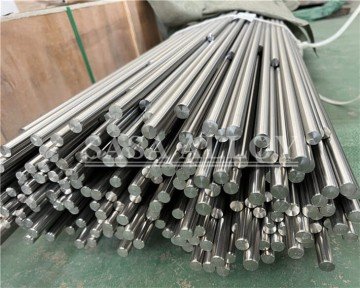
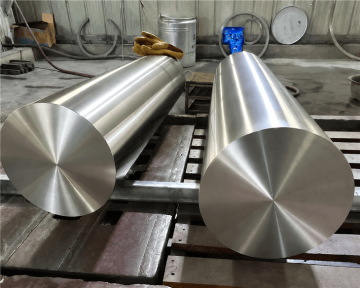
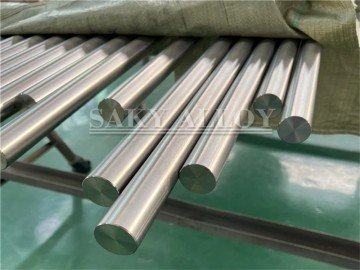
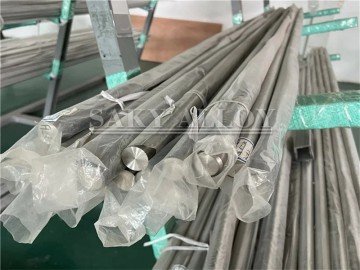
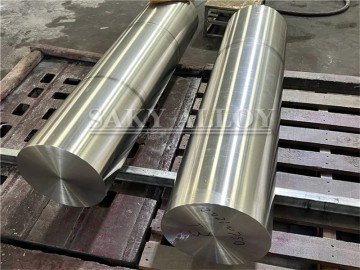
Titanium Bar Conformance to AMS Specifications
Titanium bars are vital in aerospace, defense, medical, and high-performance engineering applications due to their exceptional strength, low weight, and corrosion resistance. For critical industries such as aerospace, AMS specifications (Aerospace Material Specifications) developed by SAE International set the benchmark for material quality, consistency, and performance.
This article explores what AMS specifications mean for titanium bars, the specific requirements they set, and how manufacturers ensure full conformance.
Why AMS Specifications Are Important for Titanium Bars
AMS specifications are widely used in the aerospace sector and beyond. They define:
-
Material chemistry limits to guarantee predictable performance
-
Mechanical property requirements for strength and durability
-
Processing and heat treatment standards for consistency
-
Inspection and testing procedures to verify compliance
Following AMS specifications ensures that titanium bars perform reliably in mission-critical applications where failure is not an option. Suppliers like sakyalloy follow these strict requirements to serve aerospace and defense customers worldwide.
Key AMS Specifications for Titanium Bars
There are multiple AMS specifications that apply to different titanium grades and conditions. The most common include:
1. AMS 4928
-
Grade: Ti-6Al-4V (UNS R56400)
-
Condition: Annealed
-
Applications: Aerospace structural components, landing gear, high-performance fasteners
-
Requirements:
-
Tensile strength: ~130 ksi (895 MPa) minimum
-
Yield strength: ~120 ksi (827 MPa) minimum
-
Elongation: ≥ 10%
-
Reduction of area: ≥ 25%
-
2. AMS 4921
-
Grade: Commercially Pure Titanium Grades 1–4
-
Condition: Annealed
-
Applications: Corrosion-resistant aerospace components, chemical processing
-
Requirements:
-
Lower tensile strength than alloys
-
High ductility for forming
-
3. AMS 4930
-
Grade: Ti-6Al-4V ELI (Extra Low Interstitials)
-
Condition: Annealed
-
Applications: Aerospace, medical implants
-
Requirements:
-
Reduced oxygen and iron for improved fracture toughness
-
High fatigue resistance
-
4. AMS 4911
-
Grade: Ti-6Al-4V Sheet and Plate (reference for similar bar properties)
-
Importance: Often used alongside AMS 4928 for multi-form parts
Chemical Composition Limits in AMS Specifications
AMS specifications set strict chemical limits for each grade.
Example: Ti-6Al-4V (AMS 4928)
| Element | Min % | Max % |
|---|---|---|
| Aluminum (Al) | 5.5 | 6.75 |
| Vanadium (V) | 3.5 | 4.5 |
| Oxygen (O) | — | 0.20 |
| Iron (Fe) | — | 0.40 |
| Carbon (C) | — | 0.08 |
| Hydrogen (H) | — | 0.015 |
| Nitrogen (N) | — | 0.05 |
| Titanium (Ti) | Balance | Balance |
These limits ensure the correct balance between strength, ductility, and corrosion resistance.
Mechanical Property Requirements
AMS specifications require testing at room temperature unless otherwise specified.
-
Tensile Strength: Minimum required values depend on grade.
-
Yield Strength: Critical for load-bearing aerospace structures.
-
Elongation: Ensures adequate ductility to prevent brittle failure.
-
Reduction of Area: Measures fracture toughness.
-
Fatigue Resistance: Especially important for cyclic load conditions.
Heat Treatment and Processing
AMS-compliant titanium bars may be supplied in different conditions:
-
Annealed: Improves ductility and machinability
-
Solution Treated and Aged (STA): Enhances strength
-
Stress Relieved: Reduces residual stresses after machining
The heat treatment process must be tightly controlled, with documented parameters and furnace calibration records.
Dimensional Tolerances and Surface Finish
AMS specifications define precise tolerances for:
-
Diameter
-
Straightness
-
Roundness
-
Surface roughness
For aerospace-grade bars, the surface must be free from laps, cracks, and contamination. Minor machining marks are allowed within set limits.
Testing and Inspection Methods
AMS standards require extensive testing:
-
Chemical Analysis
-
Optical Emission Spectroscopy (OES)
-
Inert Gas Fusion (IGF) for O, N, H
-
-
Mechanical Testing
-
Tensile test (room temperature and sometimes elevated temperature)
-
Fracture toughness test for critical applications
-
-
Non-Destructive Testing (NDT)
-
Ultrasonic inspection for internal flaws
-
Eddy current testing for surface defects
-
-
Microstructural Examination
-
Confirms grain size, alpha/beta phase distribution
-
Certification and Documentation
Every shipment of AMS-compliant titanium bars must include:
-
Material Test Certificate (MTC)
-
Heat number and traceability records
-
Mechanical and chemical test results
-
Reference to the specific AMS standard
Differences Between AMS and Other Standards
| Feature | AMS Standard | ASTM Standard | ISO Standard |
|---|---|---|---|
| Scope | Aerospace and high-performance applications | Industrial and commercial | International/global applications |
| Units | Imperial and metric | Imperial and metric | Metric |
| Focus | Performance in extreme environments | General material properties | Broad, multi-industry applicability |
Applications of AMS-Compliant Titanium Bars
-
Aerospace: Landing gear, wing structures, engine mounts
-
Defense: Armor systems, missile components
-
Medical: Surgical instruments, orthopedic implants (ELI grades)
-
Industrial: High-stress chemical plant components
-
Marine: Offshore and subsea high-load parts
How Manufacturers Ensure AMS Conformance
To meet AMS specifications:
-
Use high-quality feedstock
-
Employ vacuum arc remelting (VAR) or electron beam melting (EBM) for purity
-
Follow documented heat treatment procedures
-
Conduct 100% inspection for critical dimensions
-
Maintain ISO 9001 or AS9100 quality certifications
Manufacturers like sakyalloy implement these processes to consistently supply AMS-compliant titanium bars for demanding aerospace and defense applications.
Benefits of AMS-Conformant Titanium Bars
-
Predictable performance under extreme conditions
-
Compatibility with aerospace OEM requirements
-
Reduced risk of in-service failures
-
Enhanced marketability to high-end customers
Conclusion
AMS specifications for titanium bars provide a rigorous set of requirements that ensure material performance in aerospace and other high-demand industries. From chemical composition to mechanical testing, AMS compliance is a mark of quality, reliability, and precision engineering.
Choosing a trusted supplier like sakyalloy ensures that every titanium bar meets the stringent demands of AMS standards, providing confidence to engineers, manufacturers, and end-users in the most critical applications.