
Titanium Bar Grades Explained: From Grade 1 to Grade 5
Titanium is one of the most sought-after metals in modern industry. Renowned for its exceptional strength-to-weight ratio, corrosion resistance, and biocompatibility, titanium is used in aerospace, medical, chemical, and marine sectors worldwide. But not all titanium is the same—each grade offers unique mechanical and chemical properties suited for different applications.
This article by sakyalloy breaks down the most common titanium grades used in bar form, with a focus on Grade 1 through Grade 5. If you’re unsure which titanium bar grade best fits your project, this guide will help you make an informed decision.
What Are Titanium Grades?
Titanium grades refer to specific compositions and processing methods defined by standards such as ASTM B348 (for titanium bars and billets). These grades determine:
-
Strength and ductility
-
Corrosion resistance
-
Weldability and machinability
-
Heat resistance and creep strength
-
Suitability for medical or aerospace use
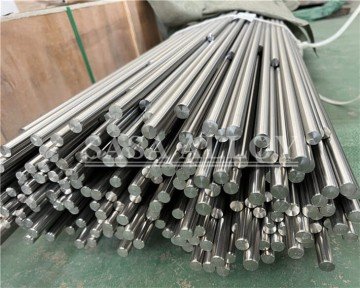
At sakyalloy, we supply titanium bars in various grades and diameters, precisely tailored to your performance needs and industry standards.
Titanium Grade 1: The Softest and Most Ductile
Grade 1 titanium is commercially pure (CP) titanium, containing at least 99.5% titanium. It is the softest and most ductile of all titanium grades.
Key Properties:
-
Tensile Strength: ~240 MPa
-
Excellent formability and cold workability
-
Outstanding corrosion resistance
-
Best suited for bending, drawing, and deep forming
Typical Applications:
-
Heat exchangers
-
Chemical processing equipment
-
Medical instruments
-
Architectural and marine components
Grade 1 titanium bars from sakyalloy are easy to weld, shape, and machine—ideal for applications where ductility and corrosion resistance are more important than strength.
Titanium Grade 2: The Most Common Pure Titanium
Grade 2 titanium is also commercially pure but slightly stronger than Grade 1 while still maintaining high corrosion resistance and weldability.
Key Properties:
-
Tensile Strength: ~345 MPa
-
Good impact resistance and fatigue performance
-
Excellent weldability
-
Moderate formability
Typical Applications:
-
Pressure vessels and tanks
-
Desalination plants
-
Marine and offshore hardware
-
Biomedical tools (non-implant)
Grade 2 Titanium Bars strike a balance betweenformability and strength, making them the most widely used CP titanium in industrial settings. sakyalloy provides Grade 2 titanium bars in both hot-rolled and annealed conditions.
Titanium Grade 3: High Strength, Less Formability
Grade 3 titanium offers higher mechanical strength than Grades 1 and 2, but with reduced formability. It’s still a commercially pure titanium but is used where pressure handling and toughness are required.
Key Properties:
-
Tensile Strength: ~450 MPa
-
High corrosion resistance
-
Lower ductility
-
Excellent performance in high-pressure environments
Typical Applications:
-
Aerospace structural parts
-
Heat exchanger tubing
-
Hydraulic systems
-
Chemical process piping
Due to its increased strength, Grade 3 titanium bars are suited for heavily loaded components that demand a combination of corrosion resistance and mechanical reliability. sakyalloy supplies Grade 3 bars with full traceability and test reports.
Titanium Grade 4: The Strongest Commercially Pure Titanium
Grade 4 titanium is the strongest among the CP titanium grades. It maintains excellent corrosion resistance while offering better strength, particularly for marine and medical environments.
Key Properties:
-
Tensile Strength: ~550 MPa
-
Slightly lower formability
-
Excellent resistance to erosion and abrasion
-
Strong resistance to chloride environments
Typical Applications:
-
Surgical instruments and bone screws
-
High-pressure valves and fittings
-
Aerospace components
-
Marine and offshore pipelines
If you need a tough, corrosion-resistant titanium bar for demanding conditions, Grade 4 offers an ideal solution. sakyalloy processes Grade 4 titanium bars with strict quality control to ensure consistent strength and performance.
Titanium Grade 5: Ti-6Al-4V – The Titanium Workhorse
Grade 5, also known as Ti-6Al-4V, is a titanium alloy containing 6% aluminum and 4% vanadium. It is the most commonly used titanium alloy globally, offering an exceptional balance of strength, weight, corrosion resistance, and fatigue resistance.
Key Properties:
-
Tensile Strength: ~900–1000 MPa
-
Excellent strength-to-weight ratio
-
Superior fatigue and creep resistance
-
Good machinability compared to other titanium alloys
Typical Applications:
-
Aerospace engine and structural parts
-
Medical implants and orthopedic devices
-
Motorsport and racing components
-
Marine shafts and fasteners
-
Industrial heat exchangers and reactor vessels
Grade 5 titanium bars are heat-treatable and used in the most demanding engineering applications. At sakyalloy, we offer Ti-6Al-4V titanium bars in annealed and solution-treated conditions, certified to ASTM B348, AMS 4928, and ISO standards.
Grade Comparison Summary
| Grade | Type | Strength | Corrosion Resistance | Weldability | Common Use |
|---|---|---|---|---|---|
| 1 | Commercial Pure | Low | Excellent | Excellent | Chemical, Marine |
| 2 | Commercial Pure | Moderate | Excellent | Excellent | Industrial, Marine |
| 3 | Commercial Pure | High | Excellent | Good | Aerospace, Chemical |
| 4 | Commercial Pure | Very High | Excellent | Good | Medical, Marine |
| 5 | Alloyed (Ti-6Al-4V) | Very High | Very Good | Moderate | Aerospace, Medical |
How to Choose the Right Titanium Bar Grade
When selecting a titanium bar grade, consider the following:
-
Mechanical Strength – Do you need high load-bearing capacity? Go with Grade 4 or 5.
-
Corrosion Resistance – For saltwater or acid exposure, Grade 1 or 2 is best.
-
Formability – If shaping and drawing are required, Grade 1 is the easiest.
-
Biocompatibility – For implants, Grade 5 or Grade 23 is recommended.
-
Weldability and Machining – Grade 2 and Grade 5 offer good balance.
sakyalloy offers expert guidance and can recommend the best titanium bar grade based on your industry and application.
Quality Control and Certification
At sakyalloy, all titanium bars undergo:
-
Ultrasonic Testing (UT) for internal defects
-
Mechanical Testing (tensile, elongation, hardness)
-
Chemical Composition Analysis
-
Dimensional and Surface Inspections
-
Certification to EN 10204 3.1 or 3.2 standards
We comply with industry specifications such as:
-
ASTM B348
-
ASME SB348
-
AMS 4928 (for aerospace)
-
ISO 5832-3 (for medical implants)
Conclusion
Understanding the differences between Grade 1 to Grade 5 titanium bars is essential for selecting the right material for your application. Whether you’re designing a satellite component, a surgical implant, or a chemical processing system, there’s a titanium grade tailored to meet your requirements.
With a wide range of stocked grades and custom machining capabilities, sakyalloy is your trusted partner for precision-engineered titanium bar solutions. Our products are used by industry leaders worldwide who value quality, performance, and technical support.