

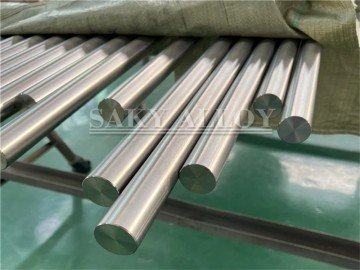
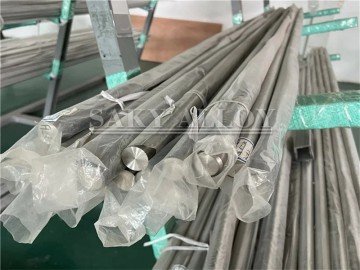
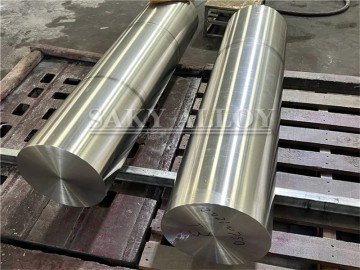
Titanium Bar vs Stainless Steel Bar: Which One to Choose?
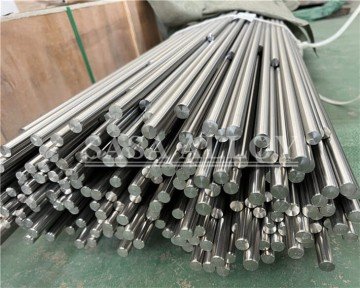
When it comes to selecting the right metal for industrial, medical, or engineering applications, titanium bar and stainless steel bar are two of the most popular options. Each material has its strengths and weaknesses, and the right choice often depends on specific project requirements like corrosion resistance, weight, cost, and mechanical strength.
This article explores a detailed comparison between titanium bars and stainless steel bars, helping engineers, procurement specialists, and manufacturers make informed decisions based on performance, application, and value.
sakyalloy
Basic Material Overview
Titanium Bar
Titanium bars are widely used in aerospace, medical, chemical, and marine industries. Common grades include Grade 2 (commercially pure) and Grade 5 (Ti-6Al-4V). These bars are known for:
-
Excellent corrosion resistance
-
High strength-to-weight ratio
-
Biocompatibility
-
Resistance to extreme temperatures
Stainless Steel Bar
Stainless steel bars, especially 304, 316, 410, and 17-4PH, are broadly applied in construction, automotive, food processing, and chemical industries. Their benefits include:
-
Good corrosion resistance
-
High strength and hardness
-
Cost-effectiveness
-
Ease of fabrication
Corrosion Resistance
Titanium
Titanium is one of the most corrosion-resistant metals, particularly effective against:
-
Chloride-rich environments (seawater)
-
Strong acids (sulfuric, hydrochloric)
-
Oxidizing and reducing agents
Titanium forms a stable oxide layer (TiO₂) that self-heals, offering long-term durability in harsh conditions. This makes titanium bars ideal for marine structures, chemical reactors, and subsea applications.
Stainless Steel
Stainless steel also resists corrosion well, particularly 316 stainless, which contains molybdenum. However, in environments with high salinity or aggressive acids, stainless steel is more prone to:
-
Pitting corrosion
-
Crevice corrosion
-
Stress corrosion cracking
Winner: Titanium Bar, especially in highly corrosive or marine environments.
Strength and Mechanical Properties
| Property | Titanium Grade 5 | Stainless Steel 304 |
|---|---|---|
| Yield Strength (MPa) | ~880 | ~215 |
| Tensile Strength (MPa) | ~950 | ~505 |
| Elongation (%) | ~10 | ~40 |
| Modulus of Elasticity | ~114 GPa | ~200 GPa |
Titanium bars, especially Grade 5, offer superior strength compared to standard stainless steel while remaining significantly lighter.
Winner: Titanium Bar for high-performance strength-to-weight applications.
Weight and Density
-
Titanium: 4.5 g/cm³
-
Stainless Steel: 7.8 g/cm³
Titanium is approximately 42% lighter than stainless steel. This is crucial for aerospace, marine, and medical implants where weight reduction improves efficiency and comfort.
Winner: Titanium Bar for lightweight design requirements.
Thermal and Electrical Conductivity
-
Titanium has low thermal and electrical conductivity, which limits its use in applications where heat dissipation is needed.
-
Stainless Steel performs better in terms of thermal conductivity, especially for cookware and thermal processing systems.
Winner: Stainless Steel Bar for thermal transfer needs.
Fabrication and Machinability
Stainless steel is generally easier to machine, weld, and fabricate due to its lower reactivity and better chip formation. Titanium is:
-
Harder to machine (especially Grade 5)
-
Requires special tooling and lower cutting speeds
-
Needs inert gas shielding when welding
However, for precision components, titanium’s excellent strength allows for reduced material volume, balancing out fabrication challenges.
Winner: Stainless Steel Bar for general ease of fabrication.
Biocompatibility and Medical Use
Titanium
-
Non-toxic and fully biocompatible
-
Promotes osseointegration (bone bonding)
-
Used in implants, orthopedic pins, dental screws
Stainless Steel
-
Certain types like 316L are used in short-term implants
-
Risk of allergic reactions to nickel
-
Not suitable for permanent implantation
Winner: Titanium Bar for medical and biological applications.
Cost Comparison
Titanium is significantly more expensive than stainless steel due to:
-
Higher raw material cost
-
Energy-intensive extraction and processing
-
Special handling and machining requirements
Stainless steel offers lower initial costs and is more economical for general-purpose applications.
Winner: Stainless Steel Bar for budget-sensitive projects.
Application Comparison Table
| Application | Preferred Material | Reason |
|---|---|---|
| Aerospace components | Titanium Bar | High strength, low weight, corrosion resistance |
| Marine equipment | Titanium Bar | Saltwater corrosion resistance |
| Medical implants | Titanium Bar | Biocompatibility |
| Food processing | Stainless Steel Bar | Cost-effective, easy to clean |
| Chemical processing | Titanium (for harsh acids) | Corrosion resistance |
| Structural frameworks | Stainless Steel Bar | Strength, affordability |
| Heat exchangers (moderate temp) | Stainless Steel Bar | Better thermal conductivity |
| Subsea instrumentation | Titanium Bar | Non-magnetic, corrosion resistant |
sakyalloy supplies both titanium bars and stainless steel bars in various grades and dimensions tailored to your application needs.
When to Choose Titanium Bar
-
Operating in highly corrosive or chloride-rich environments
-
Need for lightweight structures with high strength
-
Applications requiring biocompatibility
-
Environments with extreme temperature or pressure
-
Long-term durability with minimal maintenance
When to Choose Stainless Steel Bar
-
General structural or mechanical needs
-
Thermal processing equipment
-
Food-grade or kitchen equipment
-
Budget-sensitive industrial applications
-
Easy fabrication, forming, and welding
Summary
| Feature | Titanium Bar | Stainless Steel Bar |
|---|---|---|
| Corrosion Resistance | Excellent | Good to Moderate |
| Strength-to-Weight Ratio | Superior | Moderate |
| Weight | Lighter | Heavier |
| Cost | Higher | Lower |
| Machinability | Moderate to Difficult | Easy |
| Biocompatibility | Excellent | Moderate (depends on grade) |
| Heat Transfer | Poor | Good |
Conclusion
Both titanium bars and stainless steel bars are valuable materials, each with distinct advantages. The best choice depends on your specific application requirements, environment, and budget.
If you prioritize corrosion resistance, light weight, and strength, titanium bar is the best choice. However, if cost-effectiveness, ease of fabrication, and thermal conductivity are your top concerns, stainless steel bar is likely more suitable.
At sakyalloy, we offer a complete range of high-quality titanium and stainless steel bars, along with expert support to help you choose the right material for your project.