
Titanium Pipe Tube for Chemical Processing: Corrosion Resistance Guide
Introduction
For buyers selecting Titanium Pipe Tube for Chemical Processing, the main decision points are corrosion media, chloride concentration, temperature, pressure, flow condition, welding requirement, titanium grade, ASTM / ASME standard, wall thickness, surface condition, EN 10204 3.1 MTC, PMI testing, hydrostatic testing, UT or eddy current testing, heat number control, export packaging and delivery capability. Titanium pipe and tube are widely used in chemical processing because titanium forms a stable oxide film that provides excellent resistance to seawater, chlorides, wet chlorine, nitric acid, oxidizing environments and many industrial chemicals where stainless steel may suffer pitting, crevice corrosion or stress corrosion cracking.
Titanium pipe and titanium tube are commonly used in heat exchangers, condensers, evaporators, reactors, pressure vessels, chemical transfer lines, chlor-alkali equipment, desalination systems, acid processing equipment and offshore chemical systems. Grade 2 titanium is the most widely used industrial grade for chemical processing due to its balance of corrosion resistance, weldability and cost. Grade 7 is selected when improved corrosion resistance is needed in selected reducing acid environments, while Grade 12 provides higher strength and good corrosion performance for more demanding process conditions.
SAKY ALLOY supplies titanium pipe, titanium tube, titanium seamless pipe, titanium welded tube, titanium heat exchanger tube, titanium plate, titanium bar, titanium flange and titanium fittings for chemical processing, marine, desalination, power generation, oil and gas, heat exchanger and industrial equipment applications. This guide explains how to choose titanium pipe tube grades, standards, wall thickness, inspection requirements and related products for chemical processing projects.
What Is Titanium Pipe Tube for Chemical Processing?
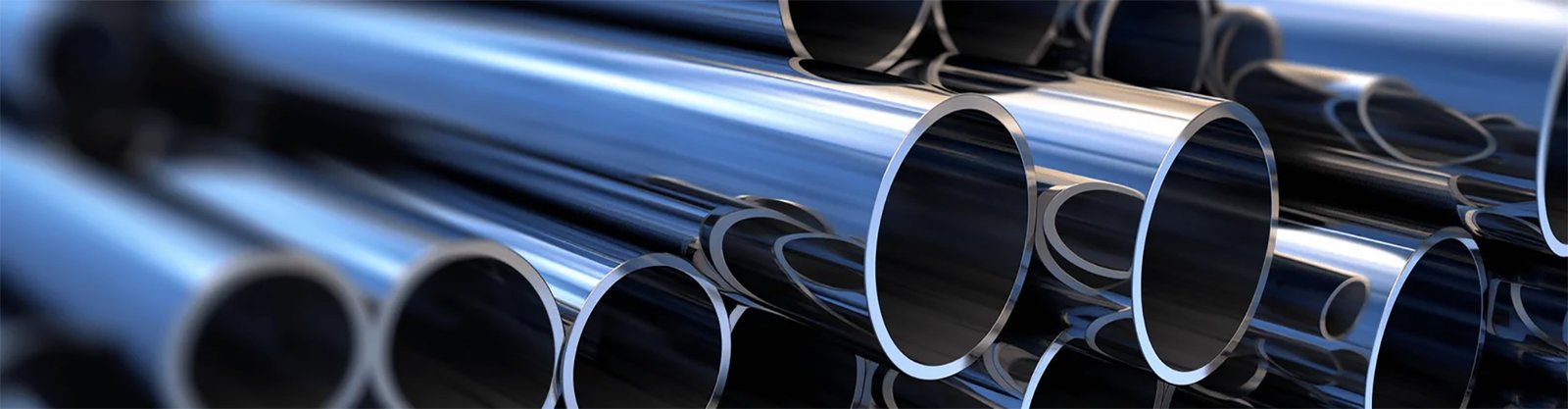
Titanium Pipe Tube for Chemical Processing refers to titanium hollow products used to transport, heat, cool or contain corrosive process fluids. Titanium pipe is generally used for process piping and fluid transfer systems, while titanium tube is commonly used for heat exchangers, condensers, evaporators, instrumentation and precision equipment. The exact product form depends on the project design, pressure rating, heat transfer requirement and applicable standard.
Titanium pipe and tube can be supplied as seamless pipe, welded pipe, seamless tube, welded tube, U-bend tube, coiled tube, heat exchanger tube or custom fabricated piping components. Common surface conditions include pickled, bright annealed, polished, sandblasted and cleaned surface. For chemical service, buyers should pay close attention to tube cleanliness, weld quality, wall thickness tolerance, end preparation and material traceability.
Typical Product Data for Titanium Pipe and Tube
| Item | Details | Buyer Check |
|---|---|---|
| Product Forms | Titanium pipe, titanium tube, seamless pipe, welded pipe, seamless tube, welded tube, U-bend tube | Confirm whether the application requires process pipe or heat exchanger tube |
| Common Grades | Grade 1, Grade 2, Grade 7, Grade 9, Grade 12, Grade 5 | Select grade according to corrosion media, temperature, pressure and fabrication requirement |
| Common Standards | ASTM B338, ASTM B337, ASTM B861, ASTM B862, ASME SB338, ASME SB861, ASME SB862 | Confirm seamless, welded, pressure pipe or condenser tube standard |
| Surface Finish | Pickled, bright, polished, cleaned, sandblasted or customized surface | Chemical service often requires clean surface and contamination control |
| Testing Options | EN 10204 3.1 MTC, PMI, hydrostatic test, eddy current, ultrasonic test, dimensional inspection | Match testing scope with project criticality and applicable standard |
Chemical Composition of Common Titanium Pipe Tube Grades
The chemical composition of titanium pipe and tube determines corrosion resistance, strength, weldability and suitability for chemical processing. Commercially pure titanium grades such as Grade 1 and Grade 2 are commonly used for chemical equipment, while alloyed grades such as Grade 7, Grade 12 and Grade 9 are selected when enhanced corrosion resistance or strength is required.
| Grade | UNS | Main Composition Feature | Chemical Processing Selection Note |
|---|---|---|---|
| Grade 1 | R50250 | Commercially pure titanium with very low interstitial content | Excellent formability and corrosion resistance for low-strength tube applications |
| Grade 2 | R50400 | Commercially pure titanium with balanced strength and ductility | Most common choice for chemical processing pipe and heat exchanger tube |
| Grade 7 | R52400 | Commercially pure titanium with palladium addition | Recommended for selected reducing acid and more aggressive chemical environments |
| Grade 9 | R56320 | Titanium alloy with aluminum and vanadium additions | Used when higher strength tube is required with good corrosion resistance |
| Grade 12 | R53400 | Titanium with nickel and molybdenum additions | Good balance of strength, weldability and corrosion resistance for process equipment |
| Grade 5 | R56400 | Ti-6Al-4V high-strength titanium alloy | Used mainly when strength is more important than general chemical equipment formability |
Mechanical Properties and Corrosion Performance
Titanium pipe and tube offer a strong combination of corrosion resistance, low density, good mechanical performance and long service life. Grade 2 is often selected because it provides better strength than Grade 1 while maintaining good weldability and corrosion resistance. Grade 12 provides higher strength and better resistance in certain process conditions, while Grade 7 offers improved corrosion resistance when palladium-enhanced titanium is required.
| Grade | Strength Level | Corrosion Resistance | Buyer Selection Note |
|---|---|---|---|
| Grade 1 | Lowest among common titanium grades | Excellent in many oxidizing and chloride environments | Choose for excellent formability and lower-pressure tube applications |
| Grade 2 | Medium for commercially pure titanium | Excellent for seawater, chlorides and many chemical environments | Most common industrial grade for chemical pipe and heat exchanger tube |
| Grade 7 | Similar to Grade 2 range depending on condition | Enhanced resistance in selected reducing acid service | Choose when Grade 2 corrosion resistance is not enough |
| Grade 9 | Higher than commercially pure titanium | Good corrosion resistance with improved strength | Use for higher-strength tubing where formability is still required |
| Grade 12 | Higher than Grade 2 | Good corrosion resistance in many chemical processing conditions | Choose when higher strength and corrosion resistance are both required |
Applicable Standards and Equivalent Grades
Titanium pipe and tube for chemical processing must be ordered according to the correct product standard. ASTM B338 is commonly used for titanium condenser and heat exchanger tubes. ASTM B337 covers seamless and welded titanium pipe. ASTM B861 and ASTM B862 are important for seamless and welded titanium pipe respectively. Buyers should also confirm ASME versions if the equipment is pressure-related.
| Standard / Grade | Description | Common Procurement Use |
|---|---|---|
| ASTM B338 / ASME SB338 | Seamless and welded titanium and titanium alloy tubes for condensers and heat exchangers | Heat exchanger tubes, condenser tubes and chemical equipment tubes |
| ASTM B337 / ASME SB337 | Seamless and welded titanium and titanium alloy pipe | General titanium pipe for chemical processing and industrial systems |
| ASTM B861 / ASME SB861 | Titanium and titanium alloy seamless pipe | Seamless titanium pipe for pressure and process piping applications |
| ASTM B862 / ASME SB862 | Titanium and titanium alloy welded pipe | Welded titanium pipe for larger diameter chemical process lines |
| ASTM B265 | Titanium and titanium alloy strip, sheet and plate | Related titanium plate and sheet for tube sheets, baffles and equipment fabrication |
| EN / GB / JIS References | International grade references such as EN 3.7035, GB TA2 and JIS titanium grades | Useful for international drawings, equivalent grade comparison and export supply |
Quality Testing and Material Traceability
Chemical processing projects often require strict material traceability and inspection. The heat number on titanium pipe or tube marking, bundle label, packing list and EN 10204 3.1 MTC should match. Buyers should verify grade, standard, chemical composition, mechanical properties, wall thickness, surface condition, hydrostatic testing and NDT records before shipment.
Certificate and Inspection Checklist
| Inspection / Document Item | What to Check | Why It Matters |
|---|---|---|
| EN 10204 3.1 MTC | Grade, UNS number, standard, heat number, chemical composition, mechanical properties and size | Confirms batch-specific quality and supports project approval |
| Heat Number Control | Heat number on pipe marking, label, packing list and MTC must match | Prevents mixed material and supports full traceability |
| PMI Testing | Verify titanium grade and alloying elements such as Pd, Ni, Mo, Al or V where applicable | Helps distinguish Grade 2, Grade 7, Grade 9, Grade 12 and Grade 5 |
| Hydrostatic Test | Confirm test pressure and standard requirement for pipe or tube | Important for process piping, pressure equipment and leak prevention |
| Eddy Current / UT Testing | Check tube or pipe integrity according to product standard and project demand | Useful for heat exchanger tubes, seamless pipes and critical chemical systems |
| Dimensional Inspection | OD, ID, wall thickness, length, straightness, ovality and end condition | Ensures welding, assembly, tube sheet expansion and installation requirements are met |
| Third-party Inspection | SGS, BV, TUV, Intertek or customer-appointed inspection before shipment | Provides additional confidence for export orders and critical process projects |
Comparison With Similar Chemical Processing Materials
Titanium pipe tube is often compared with stainless steel, duplex stainless steel, nickel alloys, zirconium and tantalum. The correct material depends on corrosion media, chloride level, pH, oxidizing or reducing condition, temperature, pressure and project budget. Titanium is very strong in many chloride and oxidizing environments, but it is not the best choice for every chemical condition.
| Material | Corrosion Resistance | Strength / Weight | Best-use Recommendation |
|---|---|---|---|
| Titanium Grade 2 | Excellent in seawater, chlorides and many oxidizing chemical environments | Good strength-to-weight ratio | General chemical processing pipe, heat exchanger tube and condenser tube |
| 316L Stainless Steel | Good general corrosion resistance but limited in severe chlorides | Medium strength, heavier than titanium | Use for moderate chemical service where titanium is not required |
| Duplex 2205 | Good chloride resistance and higher strength than 316L | High strength, heavier than titanium | Useful for chloride service when titanium performance is not necessary |
| Inconel 625 | Excellent in seawater, chlorides and many severe environments | High strength, high density | Severe offshore, subsea and high-strength corrosion-resistant applications |
| Hastelloy C276 | Excellent in many aggressive chemical media | High strength, high density | Use when titanium is not suitable in severe reducing or mixed acid environments |
| Zirconium | Excellent in certain strong acid environments | Specialty material with high cost | Special chemical processing where titanium or nickel alloys are not sufficient |
Industrial Applications of Titanium Pipe Tube
Titanium pipe and tube are widely used in chemical processing industries where stainless steel may fail due to chloride attack, crevice corrosion or chemical corrosion. The material is especially valuable when long service life, low maintenance and reliable corrosion resistance are important.
| Application Scenario | Recommended Grades | Typical Products | Selection Reason |
|---|---|---|---|
| Heat Exchangers and Condensers | Grade 2, Grade 7, Grade 12 | Seamless tube, welded tube, U-bend tube, tube sheets | Excellent chloride and seawater corrosion resistance |
| Chlor-alkali Industry | Grade 2, Grade 7 | Pipes, tubes, anode components, flanges and fittings | Strong resistance to wet chlorine and selected chloride-containing environments |
| Acid Processing Equipment | Grade 2, Grade 7, Grade 12 depending on acid condition | Process pipes, transfer lines, reactors and heat transfer tubes | Grade selection depends on oxidizing or reducing acid environment |
| Desalination and Seawater Systems | Grade 2 | Condenser tubes, heat exchanger tubes, seawater pipes and fittings | Excellent resistance to seawater corrosion and biofouling-related conditions |
| Pharmaceutical and Fine Chemical Plants | Grade 2, Grade 12 | Clean process lines, heat exchangers, vessels and tube systems | Good corrosion resistance and clean surface performance |
| Power Plant and Industrial Utilities | Grade 2, Grade 12 | Cooling tubes, condenser tubes, process piping and corrosion-resistant components | Long service life in aggressive cooling water and chemical environments |
Why Choose Titanium Pipe Tube for Chemical Processing?
Titanium pipe tube is selected for chemical processing because it offers excellent corrosion resistance, low density, high strength-to-weight ratio, good heat transfer performance and long service life. For many chloride-containing or oxidizing chemical environments, titanium can outperform stainless steel and reduce maintenance downtime.
Material Benefits for Chemical Plant Buyers
| Benefit | Practical Value |
|---|---|
| Excellent Chloride Resistance | Reduces risk of pitting and crevice corrosion in many chloride-containing process fluids |
| Long Service Life | Can reduce replacement frequency and maintenance downtime in corrosive systems |
| Good Heat Transfer Performance | Suitable for heat exchangers, condensers and evaporators in chemical processing |
| Low Density | Reduces system weight compared with many nickel alloys and stainless steels |
| Good Weldability in CP Grades | Grade 1 and Grade 2 can be fabricated into welded chemical equipment with proper shielding |
Recommended Grades by Chemical Processing Requirement
| Application Requirement | Recommended Grade | Reason |
|---|---|---|
| General chemical processing and seawater heat exchangers | Grade 2 | Best balance of corrosion resistance, weldability, availability and cost |
| Excellent formability and low-strength tube requirement | Grade 1 | Very good ductility and corrosion resistance |
| Selected reducing acid or more aggressive chemical service | Grade 7 | Palladium addition improves corrosion resistance in specific environments |
| Higher strength with good corrosion resistance | Grade 12 | Nickel and molybdenum additions improve strength and chemical processing performance |
| Higher-strength tubing with good corrosion resistance | Grade 9 | Useful where stronger titanium tubing is needed |
Limitations and Buyer Mistakes
Titanium is not suitable for every chemical environment. It performs very well in many oxidizing and chloride-containing media, but it may not be suitable for some strong reducing acids, dry chlorine, hydrofluoric acid or high-temperature conditions without careful engineering review. Buyers should not select titanium only by grade name; they should provide chemical media, concentration, temperature, pressure and operating conditions before final material selection.
Common buyer mistakes include using Grade 2 where Grade 7 is required, selecting welded pipe without checking weld quality, ordering heat exchanger tube without confirming ASTM B338, ignoring hydrostatic or eddy current testing requirements, failing to specify wall thickness tolerance, and accepting material without matching heat number and MTC. For critical chemical projects, third-party inspection and pre-shipment documentation review are strongly recommended.
Surface Finish, Fabrication and Export Packaging
Titanium pipe and tube can be supplied with pickled, bright, polished, cleaned, sandblasted or custom surface condition. For chemical processing, clean surface condition is important because contamination can affect corrosion performance and welding quality. For heat exchanger tubes, inside and outside surface quality, straightness, ovality and wall thickness consistency should be controlled carefully.
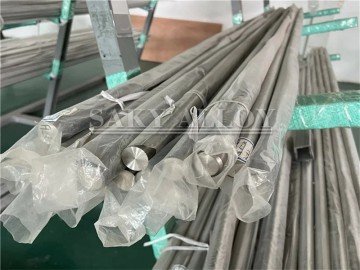
Fabrication services may include cutting, beveling, bending, U-bending, cleaning, polishing, end capping, marking and customized length supply. Export packaging should protect titanium pipe and tube from scratches, moisture, contamination and deformation. Common packaging includes plastic wrapping, end caps, wooden cases, wooden pallets, waterproof paper, tube bundles, steel strip binding and clear heat number labels.
Related Titanium Products
SAKY ALLOY supplies titanium pipe tube and related titanium products for chemical processing, heat exchangers, marine, desalination, medical, aerospace and industrial manufacturing applications. Buyers can select the correct product form according to drawings, corrosion media and equipment design.
| Product | Common Grades | Typical Use |
|---|---|---|
| Titanium Pipe and Tube | Grade 1, Grade 2, Grade 7, Grade 9, Grade 12 | Chemical processing, heat exchangers, condensers, seawater systems and process piping |
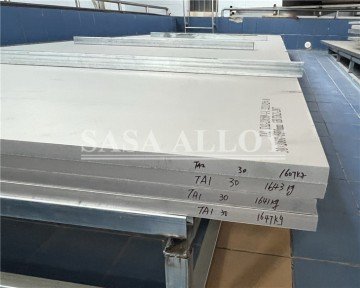
| Titanium Plate and Sheet | Grade 1, Grade 2, Grade 5, Grade 7, Grade 12, Grade 23 | Tube sheets, tanks, liners, baffles, anodes and chemical equipment plates |
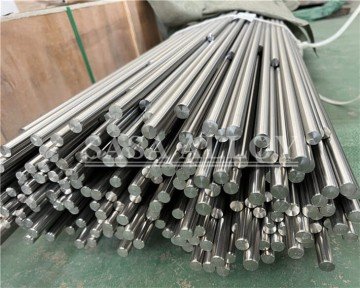
| Titanium Bar | Grade 2, Grade 5, Grade 7, Grade 9, Grade 12 | Shafts, rods, valve parts, fasteners, machined components and supports |
| Titanium Wire | Grade 1, Grade 2, Grade 5, Grade 23 | Welding wire, mesh, anodes, springs, medical wire and precision wire products |
| Titanium Forging | Grade 2, Grade 5, Grade 12 and project-specific grades | Forged rings, discs, blocks, flanges, shafts and high-load custom components |
FAQ About Titanium Pipe Tube for Chemical Processing
1. Why is titanium pipe used in chemical processing?
Titanium pipe is used in chemical processing because it has excellent resistance to many chlorides, seawater, wet chlorine, nitric acid and oxidizing chemical environments. It can provide longer service life than stainless steel in many corrosive systems.
2. Which titanium grade is best for chemical processing?
Grade 2 is the most common choice for general chemical processing due to its corrosion resistance, weldability and availability. Grade 7 is used for more aggressive selected acid environments, while Grade 12 is used when higher strength and corrosion resistance are both required.
3. What is the difference between titanium pipe and titanium tube?
Titanium pipe is usually specified by nominal pipe size and schedule for process piping systems. Titanium tube is often specified by outside diameter and wall thickness for heat exchangers, condensers, evaporators and precision equipment. Buyers should specify the exact standard and dimensions in the RFQ.
4. Is titanium suitable for all acids?
No. Titanium performs very well in many oxidizing and chloride-containing environments, but it may not be suitable for some strong reducing acids, hydrofluoric acid, dry chlorine or certain high-temperature chemical conditions. The chemical media, concentration and temperature must be reviewed before final material selection.
5. What standards are used for titanium pipe and tube?
Common standards include ASTM B338 for condenser and heat exchanger tubes, ASTM B337 for titanium pipe, ASTM B861 for seamless titanium pipe and ASTM B862 for welded titanium pipe. ASME SB versions may be required for pressure-related equipment.
6. What certificates should buyers request?
Buyers should request EN 10204 3.1 MTC showing grade, UNS number, standard, heat number, chemical composition, mechanical properties, size and test results. PMI testing, hydrostatic testing, eddy current testing, UT testing, dimensional inspection and third-party inspection may also be required for critical chemical projects.
7. What information is needed for a fast quotation?
A complete RFQ should include grade, standard, seamless or welded type, outside diameter, wall thickness, length, quantity, surface finish, testing requirement, MTC requirement, chemical media, operating temperature, pressure, destination port and packing requirement. For example: ASTM B338 Grade 2 titanium seamless tube, OD 19.05 mm, WT 1.2 mm, length 6000 mm, EN 10204 3.1 MTC, hydrostatic test and PMI testing required.
Conclusion
Titanium Pipe Tube for Chemical Processing is a reliable solution for corrosive process systems, heat exchangers, condensers, chlor-alkali equipment, seawater systems, acid processing and industrial chemical plants. Grade 2 titanium is the most widely used grade for general chemical service, while Grade 7 and Grade 12 provide additional options for more demanding corrosion or strength requirements.
For successful procurement, buyers should confirm titanium grade, ASTM or ASME standard, seamless or welded type, OD, wall thickness, length, surface finish, EN 10204 3.1 MTC, heat number control, PMI testing, hydrostatic testing, eddy current or UT testing, dimensional inspection and export packaging. A professional titanium supplier should help buyers select the correct grade and product standard according to media, temperature, pressure and fabrication requirements.
Call To Action
Contact SAKY ALLOY for Titanium Pipe Tube for Chemical Processing, Grade 2 titanium pipe, Grade 7 titanium tube, Grade 12 titanium pipe, titanium heat exchanger tube, titanium plate, bar, flange, fittings and customized titanium products. We can support ASTM B338, ASTM B337, ASTM B861, ASTM B862, ASME SB standards, EN 10204 3.1 MTC, PMI testing, hydrostatic testing, eddy current testing, UT testing, third-party inspection, export packaging and delivery support.
Send your required grade, standard, OD, wall thickness, length, quantity, chemical media, operating temperature, pressure, surface finish and certificate requirements to our technical team. We can help you select the correct titanium pipe tube specification and provide a reliable quotation for your chemical processing project.
Send Inquiry Now
Need titanium pipe or tube for chemical processing? Please send us your grade, standard, size, quantity, chemical media, temperature, pressure, MTC requirement and delivery destination. Our technical sales team will support material selection, quotation, inspection and export packaging.
Contact Technical Team