
What Are The Common Methods For Surface Polishing Of Gr5 Titanium Alloy Rods?
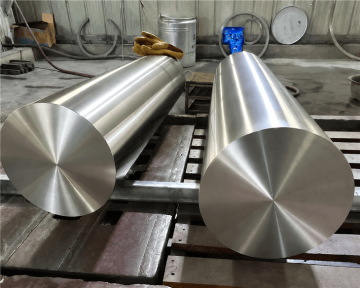
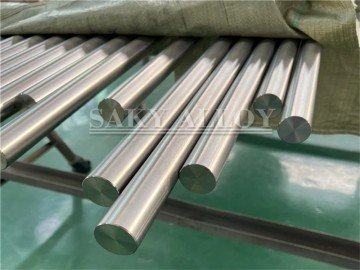
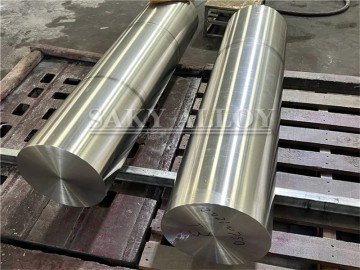
Gr5 titanium alloy (Ti-6Al-4V) is the most widely used titanium alloy worldwide. With its outstanding strength-to-weight ratio, corrosion resistance, and biocompatibility, Gr5 titanium alloy rods are indispensable in aerospace, automotive, marine, chemical, and medical industries. However, in addition to mechanical properties, surface quality plays an equally important role.
Surface polishing of Gr5 titanium alloy rods not only enhances their appearance but also improves corrosion resistance, wear performance, and fatigue life. This article explores the common methods for surface polishing of Gr5 titanium alloy rods, their advantages, limitations, and industrial applications.
Why Surface Polishing Matters
-
Aesthetic Appeal: Creates smooth, reflective, or decorative finishes.
-
Corrosion Resistance: Removes surface defects and helps form a uniform oxide layer.
-
Wear Resistance: Reduces friction and extends service life.
-
Fatigue Resistance: Eliminates micro-defects that may lead to cracks.
-
Biocompatibility: In medical applications, polished surfaces reduce bacterial adhesion.
Method 1: Mechanical Polishing
Mechanical polishing is the most traditional and widely applied method.
Process
-
Involves abrasive tools such as belts, wheels, or grinding stones.
-
Successive steps from coarse to fine grit produce a mirror-like finish.
Advantages
-
Provides excellent surface smoothness.
-
Removes machining marks and scratches.
-
Relatively low cost and widely available.
Limitations
-
Labor-intensive for large-scale production.
-
May introduce residual stress if not carefully controlled.
Applications
-
Aerospace fasteners and rods.
-
Jewelry and decorative products.
-
Precision machinery components.
Method 2: Electrolytic Polishing
Also known as electropolishing, this is a chemical process where the titanium rod is immersed in an electrolyte and subjected to an electrical current.
Process
-
Material is removed ion by ion, creating an ultra-smooth surface.
-
Typically uses a mixture of perchloric acid and alcohol as the electrolyte.
Advantages
-
Produces highly reflective, smooth, and bright surfaces.
-
Removes burrs and sharp edges.
-
Improves corrosion resistance and fatigue performance.
Limitations
-
Requires specialized equipment.
-
Electrolytes can be hazardous and need safe handling.
Applications
-
Medical implants and surgical instruments.
-
Aerospace components requiring fatigue resistance.
-
Food and pharmaceutical equipment.
Method 3: Chemical Polishing
Chemical polishing relies on immersion in chemical solutions that dissolve surface irregularities.
Process
-
Involves chemical reagents like hydrofluoric acid and nitric acid mixtures.
-
Produces a uniform matte finish.
Advantages
-
Simple and suitable for complex shapes.
-
Enhances corrosion resistance.
-
Cost-effective for mass production.
Limitations
-
Lower surface brightness compared with electropolishing.
-
Requires strict chemical waste treatment.
Applications
-
Marine and chemical industry rods.
-
Components requiring matte or non-reflective surfaces.
Method 4: Plasma Polishing
Plasma polishing is an advanced method that uses plasma discharge to smoothen the titanium surface.
Process
-
The titanium rod is exposed to low-pressure plasma in a controlled chamber.
-
Surface atoms are sputtered away, producing a clean and uniform finish.
Advantages
-
Eco-friendly and avoids hazardous chemicals.
-
Provides high surface precision.
-
Ideal for small, intricate components.
Limitations
-
High cost and specialized equipment.
-
Limited availability in industrial scale.
Applications
-
High-precision aerospace and defense components.
-
Biomedical implants requiring ultra-clean surfaces.
Method 5: Ultrasonic Polishing
Ultrasonic polishing combines abrasive slurries with ultrasonic vibration.
Process
-
A tool vibrates at ultrasonic frequency, driving abrasive particles against the titanium surface.
-
Removes material gradually to achieve a fine finish.
Advantages
-
Effective for polishing complex geometries and small parts.
-
Provides uniform results in hard-to-reach areas.
Limitations
-
Slower process compared with other polishing methods.
-
Best for precision finishing rather than bulk processing.
Applications
-
Dental and medical components.
-
Aerospace engine parts with intricate geometries.
Method 6: Laser Polishing
Laser polishing uses controlled laser beams to melt the titanium surface, which then solidifies into a smooth finish.
Advantages
-
Non-contact process with high precision.
-
Can polish specific areas selectively.
-
Enhances fatigue life by reducing surface defects.
Limitations
-
Expensive and requires advanced equipment.
-
Limited to specialized applications.
Applications
-
Aerospace turbine blades.
-
High-performance automotive components.
Comparative Overview of Polishing Methods
| Method | Surface Finish | Cost | Complexity | Typical Applications |
|---|---|---|---|---|
| Mechanical Polishing | Bright/Mirror | Low | Low | Aerospace, jewelry, machinery |
| Electropolishing | Ultra-smooth/Reflective | Medium | Medium-High | Medical, aerospace |
| Chemical Polishing | Matte/Uniform | Low | Medium | Marine, chemical industry |
| Plasma Polishing | Clean/Precise | High | High | Biomedical, aerospace |
| Ultrasonic Polishing | Fine/Detailed | Medium | Medium | Dental, precision parts |
| Laser Polishing | Smooth/Localized | High | High | Aerospace, automotive |
Choosing the Right Polishing Method
-
For Aesthetic Needs: Mechanical or electropolishing for bright finishes.
-
For Medical Use: Electropolishing or plasma polishing for biocompatibility.
-
For Mass Production: Chemical polishing for cost-effectiveness.
-
For High-Tech Applications: Laser and plasma polishing for precision.
Industrial Importance of Polished Gr5 Titanium Rods
-
Aerospace: Enhanced fatigue resistance ensures safer and lighter aircraft components.
-
Medical: Polished rods reduce bacterial adhesion and improve biocompatibility.
-
Marine: Improved corrosion resistance extends service life in seawater.
-
Automotive: Aesthetic and performance benefits in high-end racing vehicles.
Role of Reliable Suppliers
Surface polishing begins with the quality of raw material. Flaws in base titanium rods may worsen during finishing. Trusted suppliers like sakyalloy ensure Gr5 titanium alloy rods meet ASTM, ASME, and ISO standards, offering smooth surfaces suitable for advanced polishing. Working with sakyalloy ensures both material integrity and high-quality surface treatments for critical applications.
Future Trends in Titanium Alloy Polishing
-
Nanopolishing: Development of nanoscale polishing methods for ultra-smooth surfaces.
-
Eco-Friendly Techniques: Plasma and laser polishing replacing hazardous chemicals.
-
Automated Systems: AI-driven polishing robots for consistent quality.
-
Customized Finishes: Demand for decorative surfaces in consumer electronics and luxury goods.
Conclusion
Polishing Gr5 titanium alloy rods is essential to enhance both beauty and performance. Common methods include mechanical polishing, electropolishing, chemical polishing, plasma polishing, ultrasonic polishing, and laser polishing. Each method offers unique advantages, from affordability and simplicity to ultra-high precision and eco-friendliness.
By selecting the right polishing technique based on application, industries can improve aesthetics, corrosion resistance, and durability. Partnering with experienced suppliers such as sakyalloy guarantees high-quality Gr5 titanium alloy rods optimized for polishing and long-term performance in critical industries.