
What Are The Titanium Tube Welding Technologies?
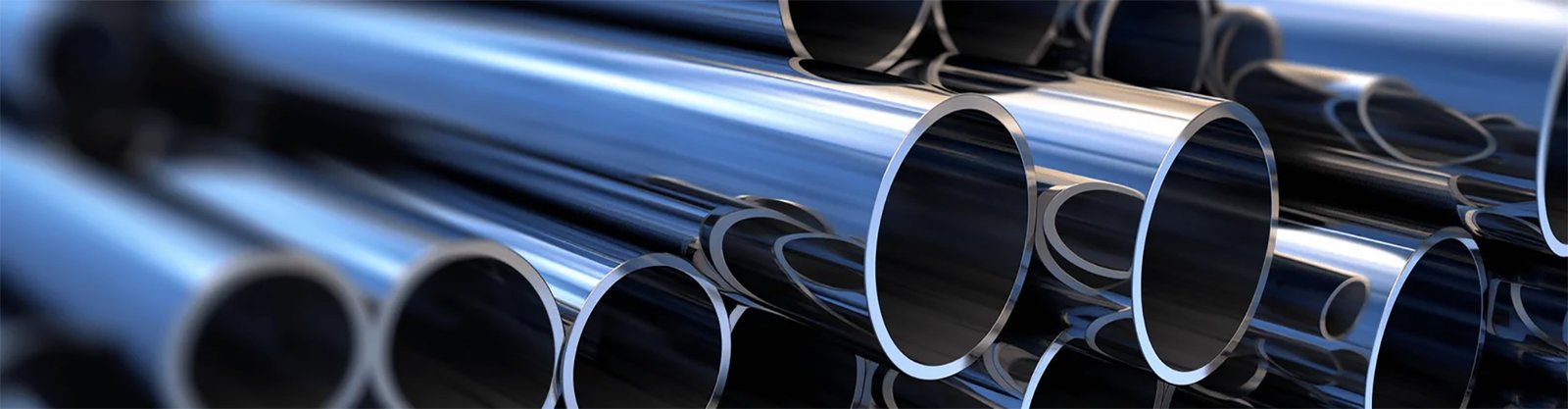
Titanium tubes are widely used in aerospace, petrochemical, power generation, medical, and marine industries thanks to their exceptional corrosion resistance, lightweight properties, and high strength-to-weight ratio. To maximize the performance of titanium tubes, welding plays a critical role in ensuring reliable joints that can withstand harsh environments and high-pressure applications.
However, welding titanium is not as simple as welding stainless steel or other alloys. Due to its strong affinity for oxygen, nitrogen, and hydrogen at elevated temperatures, titanium is highly reactive during welding. If not handled properly, contamination can lead to brittleness, cracks, and reduced mechanical properties.
This article explores the main welding technologies for titanium tubes, including their principles, advantages, challenges, and industrial applications.
1. Challenges in Welding Titanium Tubes
Before discussing technologies, it is essential to understand the challenges:
-
High reactivity: Titanium reacts easily with oxygen, nitrogen, and hydrogen above 400°C.
-
Contamination risk: Even minor exposure to air during welding can compromise weld quality.
-
Thermal conductivity: Lower than steel, requiring careful heat input control.
-
Distortion: Thin-walled titanium tubes are prone to warping.
These challenges demand specialized welding processes and strict shielding gas protection.
2. Gas Tungsten Arc Welding (GTAW/TIG)
Overview
TIG welding is the most widely used method for titanium tubes. It employs a non-consumable tungsten electrode with inert gas (argon or helium) shielding.
Advantages
-
Produces high-quality, clean welds.
-
Excellent control of heat input and weld pool.
-
Suitable for thin-walled titanium tubes.
Limitations
-
Relatively slow process.
-
Requires skilled operators and high-purity shielding gas.
Applications
-
Aerospace hydraulic and fuel systems.
-
Chemical plant piping.
-
Medical device tubing.
3. Plasma Arc Welding (PAW)
Overview
PAW is similar to TIG but uses a constricted plasma arc for greater energy density and deeper penetration.
Advantages
-
High welding speed.
-
Excellent penetration control.
-
Capable of welding thicker titanium tubes in one pass.
Limitations
-
More complex equipment.
-
Requires precise parameter control.
Applications
-
Marine heat exchanger tubing.
-
Power plant condenser tubing.
-
Aerospace engine systems.
4. Gas Metal Arc Welding (GMAW/MIG)
Overview
MIG welding uses a consumable wire electrode with inert gas shielding. Though less common than TIG for titanium, it can be used for specific applications.
Advantages
-
Higher deposition rate than TIG.
-
Suitable for automated welding.
-
Good for thicker tube walls.
Limitations
-
Greater risk of contamination.
-
Less precise control of weld pool compared to TIG.
Applications
-
Structural titanium tube assemblies.
-
Heavy-walled industrial piping.
5. Electron Beam Welding (EBW)
Overview
EBW uses a high-energy electron beam in a vacuum to fuse titanium. The process offers excellent penetration with minimal contamination risk.
Advantages
-
Deep, narrow welds with low heat input.
-
Extremely clean welds due to vacuum environment.
-
Minimal distortion.
Limitations
-
Expensive equipment.
-
Limited to factory environments.
Applications
-
Aerospace components requiring defect-free welds.
-
Nuclear industry piping.
-
Critical defense applications.
6. Laser Beam Welding (LBW)
Overview
LBW uses a focused laser beam to melt and join titanium tubes. Often performed under shielding gas or vacuum to prevent contamination.
Advantages
-
High precision and welding speed.
-
Narrow heat-affected zone (HAZ).
-
Suitable for automation and mass production.
Limitations
-
High equipment cost.
-
Sensitive to joint fit-up quality.
Applications
-
Medical device tubing.
-
Electronics cooling systems.
-
Lightweight automotive titanium tube components.
7. Friction Welding
Overview
Friction welding is a solid-state process where heat generated by mechanical friction joins titanium tubes without melting.
Advantages
-
Strong, defect-free joints.
-
No filler metal or shielding gas needed.
-
Excellent for joining titanium to dissimilar metals.
Limitations
-
Limited to specific shapes and tube sizes.
-
Requires specialized machinery.
Applications
-
Aerospace engine components.
-
Marine propulsion systems.
-
High-performance automotive tubes.
8. Orbital Welding for Titanium Tubes
Overview
Orbital welding is an automated version of TIG welding, where the electrode rotates around the tube.
Advantages
-
Consistent, repeatable welds.
-
Ideal for high-purity applications.
-
Minimal operator influence.
Limitations
-
Expensive equipment.
-
Requires careful setup.
Applications
-
Pharmaceutical and food-grade piping.
-
Semiconductor industry cooling systems.
-
High-purity chemical transport tubes.
9. Shielding and Purging in Titanium Tube Welding
No matter the technology, shielding is critical for titanium tube welding. Argon (99.999% purity) is commonly used, with trailing shields and purging to protect the backside of the weld.
Best Practices
-
Use gas lenses for uniform shielding.
-
Employ trailing shields for extended weld protection.
-
Back-purge tubes with inert gas to prevent contamination.
10. Standards for Titanium Tube Welding
-
AWS D10.6: Recommended practices for welding titanium tubing.
-
ASME Section IX: Qualification for titanium welders.
-
ASTM B338: Standard for titanium tube specifications.
Working with certified suppliers like sakyalloy ensures compliance with international standards.
11. Advantages of Welding Titanium Tubes
-
Long-lasting, leak-proof joints.
-
Resistance to seawater and chemical corrosion.
-
Lightweight yet strong welded assemblies.
-
Lower lifecycle costs due to reduced maintenance.
12. Common Mistakes to Avoid
-
Using insufficient shielding gas.
-
Welding in contaminated or humid environments.
-
Overheating thin-walled tubes, causing distortion.
-
Selecting improper filler materials.
13. Future Trends in Titanium Tube Welding
-
Hybrid processes: Combining laser and arc welding for efficiency.
-
Automation with AI: Smart monitoring of weld quality.
-
Additive + welding integration: Hybrid manufacturing for titanium structures.
-
Eco-friendly practices: Optimized shielding gas usage to reduce waste.
Conclusion
Titanium tube welding is a specialized field requiring strict control, proper shielding, and advanced technologies to ensure high-quality joints. Methods such as TIG, PAW, MIG, EBW, LBW, friction welding, and orbital welding each have unique advantages depending on application needs.
By following best practices, adhering to international standards, and sourcing materials from trusted partners like sakyalloy, industries can ensure titanium tube welds deliver long-term durability, corrosion resistance, and performance.
As demand for lightweight, high-strength, and corrosion-resistant materials continues to rise in aerospace, marine, and energy industries, titanium tube welding technologies will play an increasingly critical role in the future of manufacturing.