
What Is Titanium’s Density?
Understanding the Lightness Behind the Strength
Titanium is often referred to as a “wonder metal”, and with good reason. It is strong yet lightweight, highly corrosion-resistant, and performs reliably in some of the world’s most extreme conditions—from the depths of the ocean to outer space. But one of the key characteristics that gives titanium its unique edge is its density.
So, what is titanium’s density, and why does it matter?
In this article, we’ll explore the density of titanium in detail, how it compares to other common metals, and how this property influences its use across industries such as aerospace, medicine, marine engineering, and more. If you’re involved in material selection or simply curious about metal science, this deep dive into titanium’s density will help you understand its practical value.
The Density of Titanium: A Fundamental Property
Density is defined as the mass of a material per unit volume, commonly measured in grams per cubic centimeter (g/cm³) or kilograms per cubic meter (kg/m³). For titanium, the typical density is approximately 4.51 g/cm³, which is equivalent to 4510 kg/m³.
This places titanium squarely between aluminum and steel—much denser than aluminum, but significantly lighter than most steels and nickel alloys.
This moderate density gives titanium a high strength-to-weight ratio, meaning it can withstand great forces without adding significant mass. That’s one of the main reasons titanium is so valuable in industries where weight reduction is essential, such as aerospace, motorsports, and biomedical devices.
Why Titanium’s Density Matters
At first glance, 4.51 g/cm³ may seem like a simple number, but it has powerful implications across various applications. Let’s break down why this density matters in the real world.
Weight Reduction Without Sacrificing Strength
In aerospace design, every gram counts. Titanium’s density allows manufacturers to produce aircraft components that are lighter than steel but just as strong, dramatically reducing fuel consumption and increasing payload capacity. This is especially vital in rocket and satellite design, where mass reduction directly affects performance and cost.
Improved Human Comfort and Functionality
In medical applications, titanium’s moderate density makes it ideal for long-term implants. It provides the necessary structural support without being uncomfortably heavy. From artificial joints to dental implants, the balance of strength and weight ensures patient comfort and mobility.
Easier Transport and Installation
In construction, offshore, and power generation projects, lighter materials reduce shipping costs, allow easier handling, and minimize structural stress. Titanium’s density helps simplify logistics without compromising safety or durability, especially in remote or high-risk environments.
Comparing Titanium’s Density to Other Metals
To fully appreciate titanium’s uniqueness, it helps to compare its density to that of other metals.
-
Aluminum, known for its lightness, has a density of around 2.70 g/cm³, almost half that of titanium. However, aluminum is not nearly as strong, especially in high-temperature or corrosive environments.
-
Stainless steel typically has a density of about 7.8 g/cm³, making it nearly twice as heavy as titanium. Although it is strong and corrosion-resistant, its high weight limits its use in applications where weight savings are critical.
-
Copper, another widely used industrial metal, has a density of about 8.9 g/cm³. Its excellent conductivity makes it ideal for electrical applications, but its weight can be a drawback in mechanical systems.
-
Nickel alloys, such as Inconel or Hastelloy, also have densities above 8 g/cm³. While they offer superb corrosion resistance and heat tolerance, their high density restricts their use in weight-sensitive applications.
This comparison highlights one of titanium’s most valuable traits: it combines the corrosion resistance and strength of heavier metals with a much lighter footprint.
The Role of Density in Engineering Calculations
Density is not just a static number—it plays a vital role in engineering calculations. Whether you’re designing a component, calculating load capacity, or estimating transportation weight, understanding the density of the material is essential.
For example, when calculating the weight of a titanium pipe, plate, or rod, the formula involves both volume and density. A precise understanding of titanium’s density helps ensure accurate production planning, shipping estimates, and mechanical performance predictions.
Designers and engineers rely on these calculations when determining the feasibility of using titanium over alternatives. In industries like aviation, where compliance with strict weight limits is non-negotiable, every decimal point in density can impact the final design.
Titanium Density in Different Grades and Forms
It’s important to note that while the average density of titanium is 4.51 g/cm³, different titanium alloys may vary slightly in density due to their specific alloying elements.
Commercially pure titanium grades (like Grade 2 or Grade 4) have slightly lower densities, while alloyed grades like Ti-6Al-4V (Grade 5) or Grade 23 might be marginally denser due to the addition of aluminum, vanadium, or other elements.
However, these variations are generally minimal and don’t significantly affect the overall weight savings that titanium provides.
Real-World Applications Driven by Titanium’s Density
Because of its favorable density, titanium is used in a variety of real-world applications where material mass and performance must be balanced.
In the aerospace industry, titanium is used in wings, fuselages, and engines. It helps aircraft maintain structural integrity while reducing weight for better fuel efficiency and maneuverability.
In biomedicine, titanium is chosen for hip replacements, spinal rods, and dental implants. The density allows implants to feel natural inside the human body without creating unnecessary burden.
In the marine industry, titanium’s density supports the construction of deep-sea components like propeller shafts, valves, and frames that require both corrosion resistance and manageable weight.
In automotive racing and cycling, titanium frames and exhaust systems offer durability without sacrificing speed or performance. It’s the preferred material where performance meets precision.
In architecture and design, titanium is used in roof panels and cladding, where its low density makes it easier to work with on tall structures, while its corrosion resistance ensures long-term beauty and stability.
Why SAKYALLOY Is Your Trusted Titanium Supplier
At sakyalloy, we understand that density is more than just a number—it’s a design parameter that affects everything from transportation to final performance. We provide titanium materials that meet strict global standards, ensuring consistent density, purity, and mechanical properties.
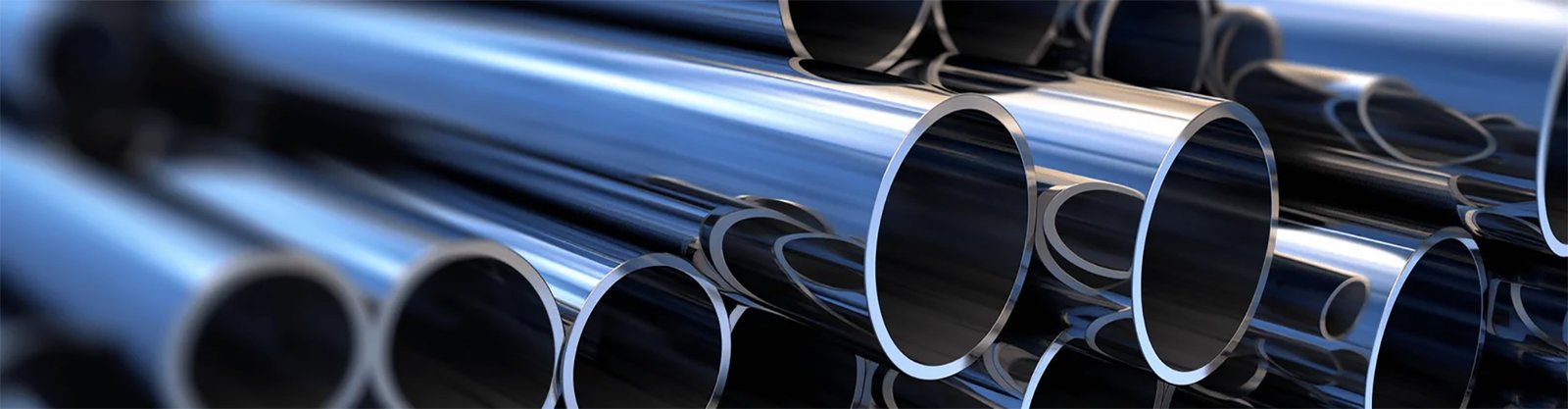
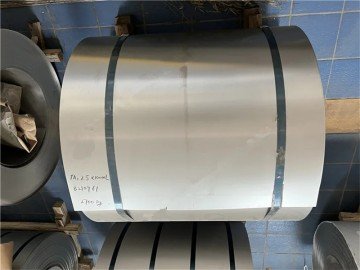
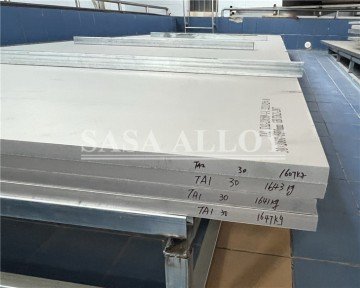
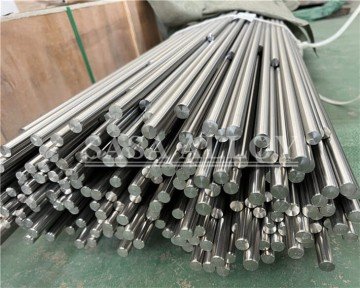
Whether you need titanium sheets, bars, wires, tubes, or custom-forged parts, sakyalloy delivers products with the precision, documentation, and traceability required in critical applications like aerospace, marine, and medical industries.
We support both small-batch and large-scale orders, offering flexible logistics and responsive technical support to help you make the best use of titanium in your project.
Final Thoughts
So, what is titanium’s density? It is 4.51 g/cm³—light enough to reduce weight, but dense enough to provide serious strength and durability. This unique balance has helped titanium earn its reputation as a game-changing metal in modern industry.
From space exploration to surgical implants, titanium’s density plays a vital role in its success. It allows engineers, designers, and manufacturers to build lighter, perform better, and last longer.
If you’re considering titanium for your next application, make sure you’re working with a supplier who understands its full potential. Reach out to sakyalloy for expert guidance and high-quality titanium materials built for precision and performance.
Explore our products and capabilities at www.sakysteel.com or email us directly at sales@sakysteel.com.