
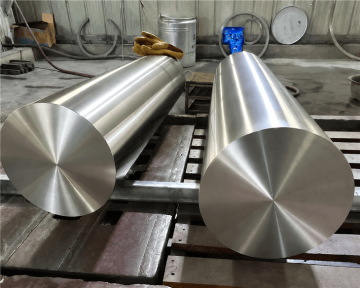
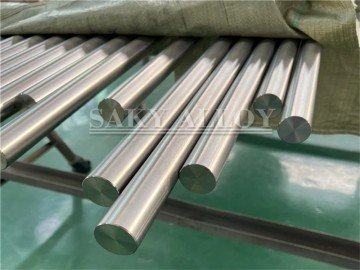
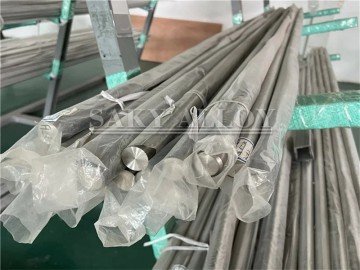
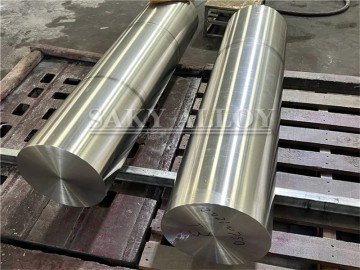
Why Gr23 Titanium Bar Is the Ideal Material for Dental Implants
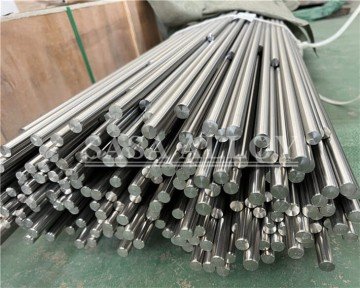
In the field of modern dentistry, materials used for dental implants must meet the highest standards of strength, corrosion resistance, and biocompatibility. Among all available options, Gr23 titanium bar, also known as Ti-6Al-4V ELI (Extra Low Interstitial), stands as the most trusted and widely used material for manufacturing dental implants and prosthetic components. Its superior mechanical performance and compatibility with human tissue have made it the gold standard for both patients and dental professionals worldwide.
This article explains why Gr23 titanium bar is the ideal material for dental implants, exploring its unique composition, mechanical properties, and performance advantages. It also highlights how SAKYALLOY, a leading global manufacturer of titanium alloys, produces high-quality Gr23 titanium bars that meet the stringent requirements of the medical and dental industries.
1. Introduction: The Importance of Material Choice in Dental Implants
Dental implants are permanent replacements for missing teeth. They are surgically inserted into the jawbone and act as artificial roots to support crowns, bridges, or dentures. The success of an implant depends largely on the material’s ability to integrate with bone (osseointegration), resist corrosion in the oral environment, and withstand long-term mechanical forces such as chewing.
Gr23 titanium bar fulfills all these requirements better than any other material, combining high strength, excellent corrosion resistance, and proven biocompatibility. As a result, it is the preferred material for:
-
Implant fixtures and abutments
-
Dental screws and rods
-
Orthodontic anchoring devices
-
Custom prosthetic components
2. What Is Gr23 Titanium?
Gr23 titanium, or Ti-6Al-4V ELI, is a high-purity version of the popular Ti-6Al-4V alloy. The “ELI” stands for Extra Low Interstitial, indicating that oxygen, nitrogen, and carbon levels are kept extremely low. This purity gives Gr23 titanium improved fracture toughness, fatigue resistance, and biocompatibility — essential qualities for medical and dental implants.
| Element | Content (%) | Function |
|---|---|---|
| Titanium (Ti) | Balance | Provides light weight and corrosion resistance. |
| Aluminum (Al) | 5.5 – 6.75 | Strengthens the alloy and stabilizes the alpha phase. |
| Vanadium (V) | 3.5 – 4.5 | Enhances ductility and stabilizes the beta phase. |
| Oxygen (O) | ≤ 0.13 | Controlled to increase toughness and prevent brittleness. |
| Iron (Fe) | ≤ 0.25 | Improves strength without reducing ductility. |
| Carbon (C) | ≤ 0.08 | Kept minimal for better toughness and fatigue performance. |
This precisely engineered composition results in a titanium alloy that is both strong and biologically inert, making it ideal for implantation inside the human body.
3. Key Properties of Gr23 Titanium Bar for Dental Implants
a) Exceptional Biocompatibility
Gr23 titanium’s surface naturally forms a thin oxide film (TiO₂) that prevents chemical reactions between the implant and surrounding tissue. This non-toxic, non-allergenic, and corrosion-resistant layer allows the material to be accepted by the body without adverse immune responses.
b) High Strength-to-Weight Ratio
Despite its light weight, Gr23 titanium has a tensile strength of 860–950 MPa, allowing it to support the same mechanical loads as stainless steel implants while being almost 50% lighter. This ensures stability and durability under continuous chewing forces.
c) Superior Fatigue Resistance
Dental implants experience repetitive stress during daily use. Gr23 titanium’s fine grain structure and low impurity content give it outstanding fatigue strength, reducing the risk of fractures over time.
d) Excellent Corrosion Resistance
The oral cavity is a highly corrosive environment due to saliva, bacteria, and changing pH levels. Titanium’s passive oxide film provides long-term resistance against corrosion, preventing metal ion release and maintaining implant integrity.
e) Modulus of Elasticity Close to Bone
Gr23 titanium has an elastic modulus of approximately 110 GPa, much closer to human bone (20–30 GPa) than that of stainless steel (200 GPa). This similarity allows stress to be evenly distributed, reducing bone resorption and ensuring long-term stability.
4. The Process of Osseointegration
One of the most critical advantages of Gr23 titanium is its ability to bond naturally with bone through osseointegration — the direct structural and functional connection between living bone and the implant surface.
During this process:
-
The titanium oxide layer interacts with bone cells (osteoblasts).
-
These cells grow and adhere to the implant surface.
-
Over time, bone tissue integrates fully, anchoring the implant firmly in place.
Gr23 titanium’s chemical stability and biocompatibility make osseointegration faster and more effective than with other metals, ensuring strong, long-lasting dental restorations.
5. Mechanical Properties of Gr23 Titanium Bars
| Property | Typical Value | Benefit |
|---|---|---|
| Tensile Strength | 860 – 950 MPa | Withstands high bite forces. |
| Yield Strength | 780 – 880 MPa | Prevents deformation under stress. |
| Elongation | 10 – 15% | Provides flexibility during installation. |
| Hardness (HRC) | 32 – 38 | Ensures wear resistance for long-term use. |
| Density | 4.43 g/cm³ | Lightweight and easy to handle during surgery. |
These properties make Gr23 titanium bar an optimal material for dental implants, balancing strength, ductility, and reliability in a compact, biocompatible structure.
6. Comparison with Other Dental Implant Materials
| Property | Gr23 Titanium | 316L Stainless Steel | Zirconia Ceramic |
|---|---|---|---|
| Biocompatibility | Excellent | Good | Excellent |
| Strength | High | Moderate | Moderate |
| Corrosion Resistance | Excellent | Fair | Excellent |
| Fatigue Resistance | Excellent | Moderate | Poor |
| Elastic Modulus (GPa) | 110 | 200 | 210 |
| Osseointegration | Excellent | Moderate | Moderate |
While ceramic implants offer good biocompatibility, they are brittle and prone to fracture. Stainless steel, though strong, lacks corrosion resistance in oral environments. Gr23 titanium bar, on the other hand, offers the best balance of properties — combining mechanical performance and biological compatibility.
7. Advantages of Using Gr23 Titanium for Dental Implants
-
Long-Term Durability: Resistant to corrosion and mechanical fatigue, lasting decades without degradation.
-
Natural Bone Integration: Promotes faster healing and strong anchoring through osseointegration.
-
Lightweight Design: Reduces surgical stress and ensures patient comfort.
-
Non-Magnetic: Compatible with MRI and radiographic imaging.
-
Hypoallergenic: Safe for patients with metal sensitivities.
-
Versatile Machinability: Easily processed into complex implant geometries with high precision.
8. Role of Surface Treatments in Enhancing Performance
Although titanium’s natural oxide layer is already effective, surface treatments can further improve implant performance.
a) Anodizing
Creates a thicker oxide layer to enhance corrosion resistance and allow color coding for dental components.
b) Sandblasting and Acid Etching
Increases surface roughness to promote bone adhesion and improve osseointegration speed.
c) Plasma Spraying or Hydroxyapatite Coating
Applies a bioactive layer that enhances bonding between bone and the implant surface.
SAKYALLOY provides customized surface treatment services for Gr23 titanium bars to meet client-specific dental manufacturing needs, ensuring optimal surface properties and mechanical integrity.
9. Applications in Modern Dentistry
Gr23 titanium bar is used extensively across various dental applications, including:
a) Implant Fixtures
The screw-shaped base inserted into the jawbone acts as the foundation for the artificial tooth.
b) Abutments
Connects the implant to the crown, ensuring stability and alignment.
c) Dental Screws and Orthodontic Devices
Used in bone anchorage and corrective orthodontic treatments due to their strength and corrosion resistance.
d) Custom Prosthetic Components
3D-printed or machined titanium structures for patient-specific dental restoration designs.
By using Gr23 titanium, dental manufacturers achieve components that combine strength, precision, and biological safety — essential for long-term oral health.
10. Heat Treatment and Microstructure Control
The mechanical and fatigue properties of Gr23 titanium can be fine-tuned through heat treatment.
-
Annealing: Enhances ductility and reduces residual stresses.
-
Solution Treatment and Aging: Improves tensile strength and fatigue life.
Controlled heat treatment creates a refined alpha-beta microstructure, providing the perfect balance of strength and flexibility required for dental implants. SAKYALLOY utilizes precision heat-treatment furnaces to ensure uniform results and consistent quality.
11. Global Standards and Certification
Dental-grade titanium must comply with strict international standards for medical safety and mechanical performance. SAKYALLOY manufactures Gr23 titanium bars that meet:
-
ASTM F136 – Standard specification for titanium alloy for surgical implants.
-
ISO 5832-3 – Wrought titanium 6Al-4V ELI for biomedical applications.
-
ASME SB348 – Titanium and titanium alloy bar and billet specifications.
Every bar undergoes ultrasonic testing, microstructural examination, and mechanical testing to ensure full compliance and traceability.
12. SAKYALLOY — Precision and Purity for Dental Applications
SAKYALLOY is a globally recognized manufacturer of high-performance titanium products, offering precision-engineered Gr23 titanium bars for dental and medical use. With advanced melting, forging, and finishing technology, SAKYALLOY guarantees superior quality, consistency, and safety.
Our advantages include:
-
Vacuum melting for purity and homogeneity.
-
Computer-controlled heat treatment for stable mechanical properties.
-
Strict quality control with non-destructive testing (NDT).
-
Custom dimensions, surface finishes, and mechanical specifications for dental manufacturers.
Through dedication to innovation and reliability, SAKYALLOY provides titanium materials that meet the highest global standards and deliver long-term success in dental implantology.
13. Future Outlook: Titanium in Next-Generation Dental Solutions
As digital dentistry and additive manufacturing continue to advance, Gr23 titanium bars are increasingly used in 3D printing of dental implants and abutments. These technologies enable custom-shaped implants tailored to each patient’s bone anatomy, improving comfort and function.
Moreover, research into nanostructured titanium surfaces aims to further accelerate osseointegration and reduce healing times. The future of dental implant technology continues to rely on titanium — a material that combines mechanical strength with biological harmony.
14. Conclusion
The success of modern dental implants depends on finding the perfect balance between strength, biocompatibility, and long-term stability — a balance perfectly achieved by Gr23 titanium bar. Its unique composition and mechanical properties allow for reliable osseointegration, resistance to corrosion, and long-lasting durability in the challenging oral environment.
Through advanced manufacturing, strict quality assurance, and adherence to international medical standards, SAKYALLOY continues to be a trusted global supplier of Gr23 titanium bars for dental implant applications.
When it comes to ensuring patient safety, comfort, and implant longevity, SAKYALLOY provides materials that stand the test of time — precision-engineered titanium solutions for a brighter, stronger smile.