
Why Grade 23 Titanium Bar Is Preferred for Medical and Aerospace Use
In industries where performance, safety, and reliability are absolutely critical, material selection can determine success or failure. Both the medical and aerospace sectors demand materials that deliver exceptional strength, corrosion resistance, and biocompatibility, while remaining lightweight and durable under extreme conditions.
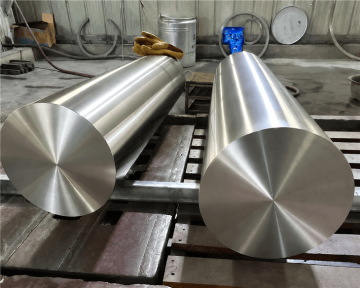
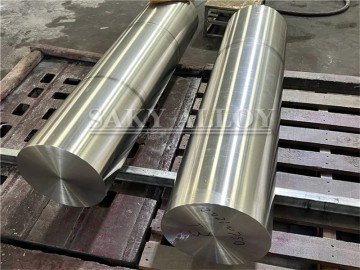
One material that consistently meets these rigorous demands is Grade 23 Titanium Bar, also known as Ti-6Al-4V ELI (Extra Low Interstitial). This premium version of the widely used Grade 5 Titanium (Ti-6Al-4V) offers enhanced purity, superior fracture toughness, and outstanding fatigue resistance, making it the material of choice for both implants and flight components.
In this article, SAKYALLOY explores why Grade 23 Titanium Bar is preferred for medical and aerospace use, focusing on its chemical composition, mechanical behavior, and proven advantages across the most demanding engineering environments.
What Is Grade 23 Titanium (Ti-6Al-4V ELI)?
Grade 23 Titanium, officially designated as Ti-6Al-4V ELI, is an alpha-beta titanium alloy that contains approximately 6% aluminum and 4% vanadium. The “ELI” (Extra Low Interstitial) designation refers to the extremely low levels of impurities such as oxygen, nitrogen, carbon, and iron, which make the alloy purer and more ductile than Grade 5.
This high-purity titanium alloy was specifically developed for biomedical and cryogenic applications, where toughness, biocompatibility, and fatigue resistance are more important than maximum strength.
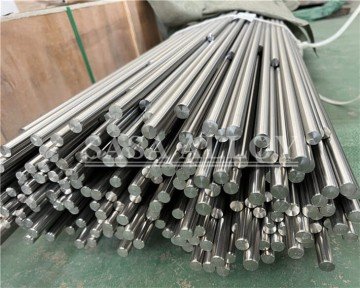
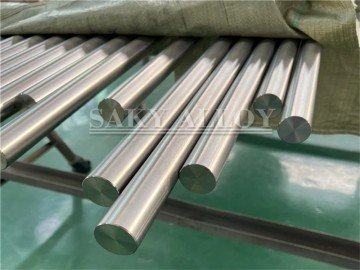
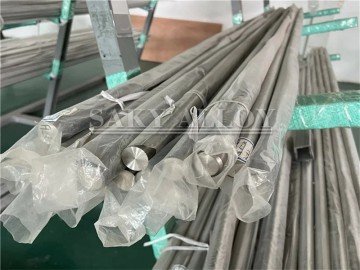
SAKYALLOY Grade 23 Titanium Bars are manufactured under ASTM B348 / AMS 4930 / ISO 5832-3 / ASTM F136 standards, ensuring precise chemical consistency, mechanical reliability, and full traceability.
Chemical Composition
| Element | Content (%) | Function |
|---|---|---|
| Aluminum (Al) | 5.5 – 6.5 | Strengthens alpha phase, improves tensile properties |
| Vanadium (V) | 3.5 – 4.5 | Stabilizes beta phase, enhances hardenability |
| Iron (Fe) | ≤ 0.25 | Controlled to prevent brittleness |
| Oxygen (O) | ≤ 0.13 | Reduced for increased ductility and toughness |
| Carbon (C) | ≤ 0.08 | Limits hardness, maintains weldability |
| Nitrogen (N) | ≤ 0.05 | Maintains microstructural stability |
| Hydrogen (H) | ≤ 0.0125 | Prevents hydrogen embrittlement |
| Titanium (Ti) | Balance | Base metal ensuring corrosion resistance |
The lower oxygen and iron contents in Grade 23 Titanium are what distinguish it from Grade 5. This refinement results in improved fracture toughness, making it suitable for load-bearing medical implants and structural aerospace parts exposed to vibration and stress.
Mechanical Properties
Grade 23 Titanium Bar offers a unique combination of strength, ductility, and fatigue resistance unmatched by most metals of similar weight.
| Property | Typical Value (Annealed) | Unit |
|---|---|---|
| Tensile Strength | 860 – 900 | MPa |
| Yield Strength (0.2%) | 795 – 830 | MPa |
| Elongation | 14 – 15 | % |
| Reduction of Area | 35 – 40 | % |
| Hardness | 30 – 32 | HRC |
| Density | 4.43 | g/cm³ |
| Modulus of Elasticity | 113.8 | GPa |
| Operating Temperature | –200°C to +400°C | °C |
These mechanical values enable Grade 23 Titanium Bars from SAKYALLOY to perform reliably in both human body environments and extreme aerospace conditions.
Key Characteristics That Make Grade 23 Titanium Ideal
1. High Strength with Low Weight
Titanium offers one of the best strength-to-weight ratios of any engineering metal. Grade 23 Titanium Bar provides strength comparable to high-grade steels but at only 45% of the weight, allowing engineers to reduce overall mass without sacrificing structural integrity.
In aerospace design, this translates into fuel efficiency and higher payload capacity, while in medical applications, it allows for lightweight implants that integrate naturally with the human body.
2. Exceptional Fracture Toughness
The Extra Low Interstitial (ELI) purity enhances the alloy’s fracture toughness, or its ability to resist crack propagation under stress.
-
In medical implants, this ensures long-term durability even under constant mechanical load (such as in hip or knee replacements).
-
In aerospace structures, it prevents microcrack failure under cyclic stress, pressure, and vibration.
SAKYALLOY Grade 23 Titanium Bars are carefully heat-treated to optimize microstructure and guarantee consistent toughness throughout each section.
3. Superior Fatigue Resistance
Both medical implants and aircraft components endure millions of load cycles during their service life. The fine alpha-beta microstructure of Grade 23 provides superior fatigue resistance, significantly extending the lifespan of critical parts.
Compared to stainless steel or cobalt-chrome alloys, Grade 23 Titanium demonstrates up to 40% higher fatigue life, making it an ideal material for components that cannot fail.
4. Outstanding Corrosion Resistance
A natural titanium oxide film forms on the surface, protecting the alloy from corrosion in various environments:
-
Seawater and saline conditions (marine and physiological fluids)
-
Oxidizing acids and alkalis
-
Chloride and sulfate solutions
This self-healing oxide layer ensures long-term stability, whether implanted inside the human body or operating in humid, coastal aerospace environments.
5. Exceptional Biocompatibility
One of the most important reasons why Grade 23 Titanium is preferred in the medical field is its biocompatibility — it is non-toxic, non-allergenic, and completely inert within biological systems.
-
It does not corrode or release harmful ions inside the body.
-
It promotes osseointegration, allowing bone tissue to bond naturally with the implant surface.
-
It has excellent MRI compatibility, being non-magnetic and safe for imaging.
SAKYALLOY supplies Grade 23 Titanium Bars that meet ASTM F136 / ISO 5832-3 medical standards, ensuring purity, safety, and traceability for surgical and orthopedic applications.
6. Excellent Cryogenic and Thermal Stability
Grade 23 Titanium retains its strength and ductility across a wide temperature range, from cryogenic (–200°C) to elevated temperatures (400°C).
-
In aerospace, this enables use in engine components and cryogenic fuel systems.
-
In medical devices, it ensures dimensional stability during sterilization cycles or temperature fluctuations inside the human body.
Aerospace Applications of Grade 23 Titanium Bar
In the aerospace industry, the combination of lightweight strength and fatigue resistance makes Grade 23 Titanium Bars a critical material for high-performance systems.
Key Aerospace Applications Include:
-
Aircraft fasteners, bolts, and screws for airframes and engine assemblies
-
Hydraulic system components operating under high pressure
-
Cryogenic fuel and oxidizer tanks for rockets and space vehicles
-
Compressor blades and spacers in jet engines
-
Landing gear and actuator housings requiring structural stability
The reduced weight and improved fracture resistance directly contribute to higher fuel efficiency and safety in modern aircraft design.
SAKYALLOY Aerospace Titanium Bars are produced with AMS 4930 / ASTM B348 certifications, meeting stringent international aerospace material standards.
Medical and Healthcare Applications
In the medical sector, Grade 23 Titanium is considered the gold standard for implantable materials due to its biocompatibility, corrosion resistance, and mechanical compatibility with bone tissue.
Common Medical Applications Include:
-
Orthopedic implants: hip, knee, and shoulder joints
-
Dental implants and abutments
-
Spinal fixation devices and bone screws
-
Cranial plates and prosthetics
-
Surgical tools and components for medical equipment
The alloy’s ability to withstand long-term physiological loading while remaining inert and lightweight makes it unmatched for both temporary and permanent medical devices.
Comparison: Grade 23 vs. Grade 5 Titanium
| Property | Grade 5 (Ti-6Al-4V) | Grade 23 (Ti-6Al-4V ELI) |
|---|---|---|
| Oxygen Content | ≤ 0.20% | ≤ 0.13% |
| Tensile Strength | 895 MPa | 860 MPa |
| Elongation | 10 – 12% | 14 – 15% |
| Fracture Toughness | Good | Excellent |
| Fatigue Strength | High | Very High |
| Biocompatibility | Moderate | Excellent |
| Cryogenic Stability | Limited | Superior |
While both alloys share similar composition, Grade 23 Titanium offers improved ductility, fatigue strength, and purity, making it better suited for implants and aerospace systems exposed to cyclic or impact loads.
Manufacturing Excellence at SAKYALLOY
SAKYALLOY employs advanced manufacturing and quality assurance techniques to produce Grade 23 Titanium Bars that meet the most demanding global standards.
Our Production Capabilities Include:
-
Vacuum arc remelting (VAR) and electron beam melting (EBM) for purity control
-
Hot forging and CNC precision machining for dimensional accuracy
-
Vacuum annealing and solution treatment for optimal mechanical properties
-
Ultrasonic and radiographic testing to detect internal defects
-
Surface finishing and passivation for superior cleanliness and corrosion resistance
Each bar is delivered with EN 10204 3.1/3.2 certificates and complete traceability, ensuring compliance with ASTM, AMS, and ISO standards.
Testing and Certification
To guarantee top performance, all SAKYALLOY Grade 23 Titanium Bars undergo comprehensive testing:
-
Tensile, yield, and elongation tests (ASTM E8)
-
Fatigue and fracture toughness tests (ASTM E466 / E1820)
-
Chemical analysis (ASTM E1473)
-
Ultrasonic and eddy current inspection for internal soundness
-
Microstructure analysis to verify alpha-beta phase distribution
These tests confirm the material’s reliability for mission-critical applications in both medical implants and aerospace systems.
Why SAKYALLOY Grade 23 Titanium Bars Lead the Industry
SAKYALLOY is a globally recognized manufacturer of titanium, nickel, and stainless steel materials, trusted by clients across aerospace, medical, and industrial sectors.
Our Competitive Advantages:
-
ISO 9001:2015 Certified Facilities
-
Advanced Forging and Heat Treatment Capabilities
-
Comprehensive Testing and Inspection
-
On-time Global Delivery
-
Technical Support for Custom Specifications
Through decades of metallurgical expertise and precision engineering, SAKYALLOY ensures that each Grade 23 Titanium Bar provides unmatched purity, consistency, and mechanical reliability for critical applications.
Conclusion
The preference for Grade 23 Titanium Bar in medical and aerospace applications stems from its unique combination of purity, mechanical strength, corrosion resistance, and biocompatibility. Its ability to perform under extreme stress, vibration, and temperature — while maintaining stability and safety — makes it indispensable to industries where failure is not an option.
Whether supporting human life through medical implants or enabling flight in demanding aerospace missions, SAKYALLOY Grade 23 Titanium Bars deliver proven performance and trust.