
Why Grade 9 Titanium Is the Preferred Alloy for Tubing over Grade 5
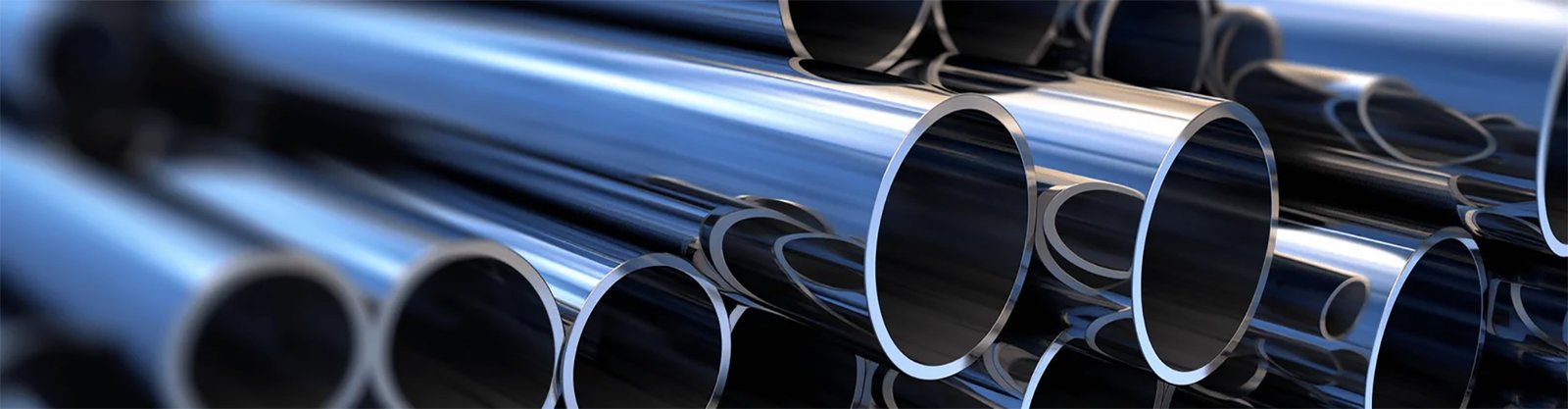
Titanium alloys are essential for high-performance engineering applications where low weight, strength, corrosion resistance, and long-term durability are required. Among these alloys, Grade 9 (Ti-3Al-2.5V) and Grade 5 (Ti-6Al-4V) are two of the most widely used across aerospace, automotive, marine, medical, and sporting industries. However, when it comes to tubing applications, engineers overwhelmingly prefer Grade 9 titanium over Grade 5 due to its optimal balance of strength, ductility, fabrication ease, and weldability.
Understanding the Composition of Grade 9 vs Grade 5 Titanium
Grade 9 Titanium (Ti-3Al-2.5V)
-
Titanium: Balance
-
Aluminum: 2.5–3.5 percent
-
Vanadium: 2–3 percent
-
Alloy Type: Alpha-beta alloy
Grade 5 Titanium (Ti-6Al-4V)
-
Titanium: Balance
-
Aluminum: 5.5–6.75 percent
-
Vanadium: 3.5–4.5 percent
-
Alloy Type: Alpha-beta alloy
Grade 5 has higher aluminum and vanadium content, which increases strength but reduces ductility, formability, and weldability.
Why Grade 9 Titanium Is the Preferred Alloy for Tubing
Grade 9 is specifically engineered to provide an ideal balance between manufacturability and mechanical strength—something essential for producing high-quality tubing. Below are the core reasons it outperforms Grade 5 in tube production.
1. Superior Cold Formability
One of the most important requirements in tubing production is the ability to cold work the material without cracking.
Grade 9 Titanium:
-
Excellent cold formability
-
Can be drawn, rolled, swaged, bent, and hydroformed
-
Maintains structural integrity during forming
-
Ideal for thin-wall and precision tubing
Grade 5 Titanium:
-
Poor cold formability
-
Prone to cracking during cold deformation
-
Requires hot forming, increasing production cost
For cold-drawn tubing and intricate tube shapes, Grade 5 simply cannot match Grade 9’s workability.
2. Better Weldability for Tubing Applications
Weldability is essential for tube joints, aerospace hydraulic lines, and structural assemblies.
Grade 9 Titanium:
-
Excellent weldability
-
Creates strong and ductile welds
-
Minimal risk of heat-affected zone embrittlement
-
Widely used for welded tubing in aerospace and automotive sectors
Grade 5 Titanium:
-
More difficult to weld
-
Higher risk of alpha-case formation
-
Welds may become brittle without perfect shielding
-
Requires advanced welding techniques and strict inert atmosphere
For systems requiring numerous weld joints, Grade 9 is clearly the safer and more cost-efficient alloy.
3. Ideal Strength-to-Weight Ratio for Tubing
While Grade 5 is stronger, Grade 9 offers more than enough strength for most tubing applications—while being easier to fabricate.
Tensile Strength:
-
Grade 9: 620–760 MPa
-
Grade 5: 900–1100 MPa
Grade 9 provides:
-
High structural reliability
-
Excellent fatigue resistance
-
Lower density and sufficient strength for aerospace and sports frames
For tubing—especially thin-wall tubing—Grade 9’s medium strength and higher ductility make it the more practical choice.
4. Lower Cost and More Efficient Production
Grade 9 is significantly more economical to produce into tubes.
Why Grade 9 Costs Less to Manufacture:
-
Lower alloying content
-
Reduced machining difficulty
-
No need for hot forming
-
Lower scrap rate during tube drawing
-
Easier welding and forming reduce labor costs
Grade 5 requires more intensive processing and extreme precision, increasing manufacturing costs considerably.
5. Superior Fatigue and Stress Resistance in Tubular Structures
Tubing often experiences cyclic loading, bending, vibration, and dynamic stress.
Grade 9 Titanium:
-
Excellent fatigue resistance
-
Suitable for aircraft tubing
-
Performs well under vibration and cyclic stresses
-
Ideal for bicycle frames, marine tubing, and automotive components
Grade 5 Titanium:
-
Higher tensile strength but lower fatigue ductility
-
More prone to crack initiation in bending or vibration
Tube reliability depends on how the material behaves under real-world dynamic loads—Grade 9 is better suited.
6. Greater Flexibility for Thin-Wall Tubing
Thin-wall tubes require alloys that can be:
-
Drawn to small thicknesses
-
Bent without cracking
-
Welded without loss of structural integrity
Grade 9:
-
Perfect for thin-wall production
-
Maintains dimensional accuracy
-
High concentricity and uniform wall thickness
Grade 5:
-
Difficult to produce in thin walls
-
Requires specialized equipment and heating
This is why bicycle manufacturers, aerospace companies, and race-car builders overwhelmingly choose Grade 9 for performance tubing.
7. Better Corrosion Resistance in Cold Marine and Chemical Environments
Both alloys have excellent corrosion resistance, but Grade 9 offers advantages in:
-
Cold seawater
-
Chloride-rich environments
-
Marine fatigue conditions
Unlike Grade 5, Grade 9 maintains better corrosion-wear resistance in dynamically loaded offshore environments.
Industrial Applications Where Grade 9 Tubing Outperforms Grade 5
Thanks to its combination of strength, ductility, and fabrication ease, Grade 9 tubing is widely used across multiple industries.
Aerospace and Aviation
-
Hydraulic lines
-
Fuel system tubing
-
Pneumatic control lines
-
Lightweight structural tubing
Grade 9 meets performance and safety requirements at lower cost and easier manufacturability.
Automotive and Motorsports
-
Roll cage structures
-
Exhaust systems
-
Suspension components
-
High-performance intake piping
Drivers value Grade 9’s durability, vibration resistance, and lightweight profile.
High-End Bicycle Manufacturing
-
Performance and racing frames
-
Road and mountain bike tubing
-
Ultra-light aero components
Grade 9 bends and welds smoothly, creating strong yet light frames that withstand fatigue loading.
Marine Engineering
-
Shaft sleeves
-
Seawater tubing
-
Offshore structural components
Grade 9 offers superior corrosion resistance under marine fatigue.
Industrial and Chemical Systems
-
Heat exchanger tubing
-
Process piping
-
Pressure lines
-
Condenser tubes
Its resistance to oxidation, acids, and chloride-induced fatigue makes Grade 9 a reliable choice for long-term performance.
Side-by-Side Comparison Table
| Feature | Grade 9 Titanium (Ti-3Al-2.5V) | Grade 5 Titanium (Ti-6Al-4V) |
|---|---|---|
| Strength | Medium-high | Very high |
| Weldability | Excellent | Moderate |
| Cold Formability | Excellent | Low |
| Fatigue Resistance | High | Moderate-high |
| Tube Manufacturability | Outstanding | Difficult |
| Cost | Lower | Higher |
| Heat Treatment Response | Moderate | Strong |
| Best For | Tubing | High-strength components |
Why Grade 9 Titanium Tubing Is the Global Standard
Grade 9 is preferred specifically because tubing requires:
-
Cold working
-
Welding
-
Bending
-
Precision forming
-
Dimensional consistency
Grade 5, although stronger, lacks the ductility needed to produce reliable, thin-wall tubes economically and safely.
Why Choose Grade 9 Titanium Tubing From Trusted Manufacturers
High-quality Grade 9 titanium tubing supplied by sasaalloy ensures:
-
Superior dimensional accuracy
-
Consistent cold-worked strength
-
Excellent weld performance
-
Smooth surface finish
-
Tight tolerances for aerospace and medical use
-
Full chemical and mechanical certification
-
Compliance with ASTM and EN specifications
Reliable sourcing is essential for industries where tubing failure is not an option.
Conclusion
Grade 9 titanium has become the preferred alloy for tubing across aerospace, cycling, marine, industrial, and automotive applications because it offers the ideal combination of strength, corrosion resistance, ductility, weldability, fatigue resistance, and cost-effectiveness. Grade 5 titanium, while stronger, is significantly harder to form, weld, or cold work—making it less suitable for tube production and more appropriate for high-load machined components.
With the support of high-quality suppliers like sasaalloy, industries worldwide can confidently rely on Grade 9 titanium tubing for superior performance, manufacturing efficiency, and long-term durability in demanding environments.