
Why Grade 9 Titanium Rod Is the Perfect Balance Between Strength and Formability
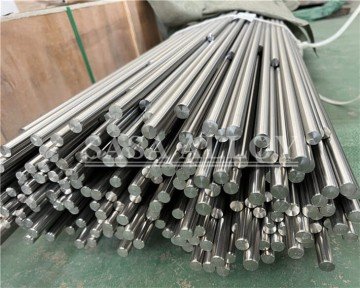
In today’s competitive engineering landscape, manufacturers are constantly searching for materials that combine high strength, lightweight performance, and ease of fabrication. Among the many titanium alloys available, Grade 9 Titanium Rod (Ti-3Al-2.5V) stands out as a truly balanced solution — offering superior strength compared to commercially pure titanium, while maintaining far better formability than the higher-strength alloys like Grade 5 (Ti-6Al-4V). In this article, sakyalloy explores why Grade 9 Titanium Rod is widely regarded as the perfect blend of mechanical performance and workability, and how its unique properties make it indispensable across industries.
1. Introduction to Grade 9 Titanium (Ti-3Al-2.5V)
Grade 9 Titanium, also known as Ti-3Al-2.5V, is an alpha-beta titanium alloy that consists primarily of titanium with small additions of aluminum (3%) and vanadium (2.5%). These alloying elements strengthen the metal’s structure while preserving its flexibility and weldability — resulting in a material that can be both strong and easy to fabricate.
This makes Grade 9 Titanium Rod especially valuable for applications that demand lightweight yet durable components, such as aerospace structures, high-performance bicycles, marine hardware, and heat exchangers.
2. Chemical Composition of Grade 9 Titanium Rod
| Element | Percentage (%) | Function |
|---|---|---|
| Titanium (Ti) | Balance | Base metal providing corrosion resistance and light weight. |
| Aluminum (Al) | 2.5 – 3.5 | Strengthens the alloy while maintaining low density. |
| Vanadium (V) | 2.0 – 3.0 | Improves hardenability and fatigue resistance. |
| Iron (Fe) | ≤ 0.25 | Controlled to maintain toughness. |
| Oxygen (O) | ≤ 0.20 | Adds strength but kept low to ensure ductility. |
| Carbon (C) | ≤ 0.08 | Increases hardness slightly. |
| Nitrogen (N) | ≤ 0.05 | Controlled to prevent brittleness. |
| Hydrogen (H) | ≤ 0.015 | Low levels prevent embrittlement. |
This carefully engineered chemistry produces a balanced alpha-beta microstructure, giving Grade 9 an exceptional combination of mechanical strength, corrosion resistance, and formability.
3. Mechanical Properties: Strong Yet Ductile
The mechanical properties of Grade 9 Titanium Rod highlight its unique ability to provide both strength and flexibility — a combination that is difficult to achieve in most metals.
| Property | Typical Value | Significance |
|---|---|---|
| Density | 4.48 g/cm³ | 45% lighter than steel, reducing overall component weight. |
| Tensile Strength | 620 – 700 MPa | High strength suitable for structural applications. |
| Yield Strength | 480 – 550 MPa | Excellent load-bearing capacity. |
| Elongation | 15 – 20% | Ensures ductility and formability during shaping. |
| Modulus of Elasticity | 105 GPa | Provides stiffness and vibration resistance. |
| Fatigue Strength | 450 MPa | Excellent resistance to cyclic loading. |
| Hardness | 200 – 250 HB | Ensures wear resistance while maintaining machinability. |
With this combination of properties, sakyalloy Grade 9 Titanium Rod provides superior strength compared to commercially pure titanium, while remaining easier to form, bend, and weld than high-strength alloys like Grade 5.
4. Comparing Grade 9 to Other Titanium Alloys
| Property | Grade 2 (CP Titanium) | Grade 9 (Ti-3Al-2.5V) | Grade 5 (Ti-6Al-4V) |
|---|---|---|---|
| Tensile Strength (MPa) | 345 | 620–700 | 895 |
| Yield Strength (MPa) | 275 | 480–550 | 830 |
| Elongation (%) | 25 | 18 | 10 |
| Weldability | Excellent | Excellent | Moderate |
| Formability | Excellent | Very Good | Limited |
| Corrosion Resistance | Excellent | Excellent | Excellent |
| Density (g/cm³) | 4.51 | 4.48 | 4.43 |
This table shows why Grade 9 Titanium Rod is often considered the “sweet spot” of titanium alloys — providing a balance between strength, formability, and weldability that neither Grade 2 nor Grade 5 can match.
5. The Role of Aluminum and Vanadium
The alloying elements in Grade 9 titanium play distinct roles:
-
Aluminum (Al) strengthens the alpha phase of titanium, providing higher tensile and yield strength without significantly increasing density.
-
Vanadium (V) stabilizes the beta phase, improving ductility and formability.
Together, these elements create a microstructure that is fine-grained and uniform, giving Grade 9 superior mechanical performance while remaining easy to process into complex shapes.
6. Formability and Fabrication Advantages
One of the defining features of Grade 9 Titanium Rod is its excellent cold-forming ability. It can be rolled, bent, drawn, or spun into tubes and complex profiles without cracking.
-
Cold working: Up to 30% deformation without requiring intermediate annealing.
-
Hot forming: Best between 700°C and 850°C for precision shaping.
-
Annealing: Conducted at 750–800°C to restore ductility after forming.
This workability allows manufacturers to produce lightweight yet strong parts efficiently — reducing machining time and production costs.
7. Outstanding Weldability
Unlike some high-strength titanium alloys, Grade 9 Titanium Rod can be welded easily using TIG (GTAW) or electron beam welding methods without post-weld heat treatment. The resulting joints maintain nearly the same strength and corrosion resistance as the parent material.
This makes it ideal for aerospace hydraulic lines, marine piping, and structural frameworks, where precision welding and leak-free performance are essential.
8. Corrosion Resistance and Environmental Stability
Grade 9 retains titanium’s signature ability to resist corrosion through the formation of a self-healing oxide layer on its surface. It performs exceptionally well in:
-
Seawater and marine atmospheres
-
Chloride-rich environments
-
Oxidizing and reducing acids
-
High-humidity or industrial conditions
This corrosion resistance enables sakyalloy Grade 9 Titanium Rod to deliver long-lasting performance in offshore, chemical, and aerospace environments where moisture and chemical exposure are unavoidable.
9. Temperature Performance
Grade 9 Titanium offers excellent mechanical stability across a broad temperature range:
-
High-temperature resistance: up to 400°C (752°F) continuous service
-
Short-term exposure: up to 480°C (896°F) without loss of strength
-
Cryogenic capability: remains ductile at temperatures as low as -250°C
These characteristics allow it to be used in heat exchangers, engine components, and aircraft structures that face thermal cycling and vibration stress.
10. Fatigue and Creep Resistance
Because of its alpha-beta structure and refined grain size, Grade 9 demonstrates impressive fatigue strength (≈450 MPa), meaning it can withstand millions of load cycles without cracking.
Additionally, it exhibits good creep resistance — the ability to resist deformation under sustained stress and temperature — making it ideal for long-term use in aerospace and high-pressure systems.
11. Applications Across Industries
The unique combination of strength and formability makes Grade 9 Titanium Rod a material of choice for high-performance applications:
Aerospace Industry
-
Hydraulic and pneumatic tubing
-
Airframe and structural supports
-
Exhaust and cooling systems
Automotive and Motorsports
-
Lightweight exhaust systems
-
High-strength connecting rods and fasteners
-
Racing bicycle frames and suspension parts
Marine Engineering
-
Offshore platform components
-
Ship fittings and heat exchangers
-
Submarine piping and propeller shafts
Industrial and Chemical Processing
-
Corrosion-resistant process equipment
-
Condenser and evaporator tubing
-
Heat recovery systems
Medical and Sports Equipment
-
Surgical tools and lightweight prosthetics
-
High-end sports gear and performance bicycles
In each of these fields, Grade 9 provides the optimal combination of durability, workability, and corrosion resistance.
12. Economic and Performance Benefits
While titanium is generally more expensive than stainless steel or aluminum, the long-term value of Grade 9 Titanium Rod far outweighs the initial cost.
Key benefits include:
-
Lower lifecycle cost due to extended service life.
-
Reduced maintenance and repair expenses.
-
Superior performance in corrosive or extreme environments.
-
Lighter components for improved energy efficiency in transportation systems.
This makes Grade 9 a cost-effective investment for companies prioritizing performance and reliability.
13. Quality Standards and Testing
All sakyalloy Grade 9 Titanium Rods are produced in compliance with international specifications such as:
-
ASTM B348 – Titanium and Titanium Alloy Bars and Rods
-
AMS 4943 / AMS 4944 – Aerospace standards for Ti-3Al-2.5V
-
ISO 5832-11 – Medical-grade titanium standard
Each batch undergoes:
-
Spectrochemical analysis for alloy verification.
-
Ultrasonic testing for internal flaws.
-
Tensile, yield, and elongation tests to confirm mechanical integrity.
-
Dimensional and surface inspections for precision tolerance control.
These strict quality measures ensure consistent performance and reliability across every rod produced.
14. Sustainability and Environmental Impact
Titanium, including Grade 9, is 100% recyclable and requires less maintenance over its lifetime, reducing environmental impact. Its corrosion resistance eliminates the need for coatings or chemical treatments, supporting sustainable manufacturing practices — an important factor for eco-conscious industries.
15. Conclusion
Grade 9 Titanium Rod (Ti-3Al-2.5V) represents the perfect equilibrium between strength and formability — a material that offers the high mechanical performance of advanced alloys while maintaining the ease of fabrication of pure titanium.
From aerospace to marine engineering, it delivers exceptional durability, corrosion resistance, and long-term stability, ensuring that every structure and component performs flawlessly under demanding conditions.
When seeking titanium solutions that provide superior performance without sacrificing manufacturability, sakyalloy Grade 9 Titanium Rod is the clear choice.
With advanced production technology, strict quality control, and global standard compliance, sakyalloy continues to deliver titanium materials that empower innovation — achieving the ideal balance between strength, formability, and reliability for the industries that shape our future.