
Titanium for Medical Devices: ASTM F67, F136 and Biocompatibility Basics
Introduction
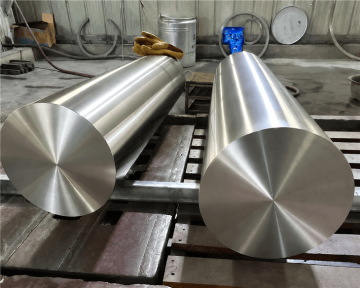
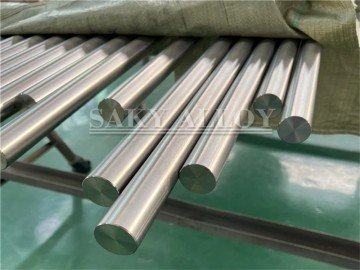
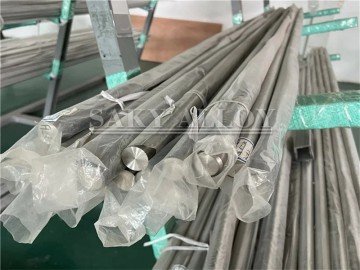
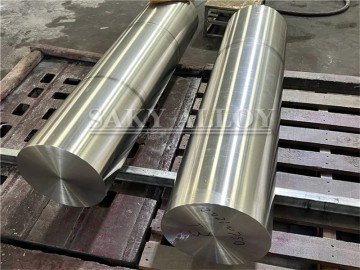
Titanium for Medical Devices is selected for orthopedic implants, dental components, bone screws, trauma plates, spinal fixation systems, surgical instruments and implantable device housings because it combines low density, corrosion resistance, useful mechanical strength and a stable surface oxide. ASTM F67 covers four grades of unalloyed titanium used to manufacture surgical implants, while ASTM F136 covers wrought annealed Ti-6Al-4V ELI, commonly called Grade 23, for surgical implant applications. Buyers must specify the medical material standard explicitly because industrial titanium supplied to ASTM B348 or ASTM B265 is not automatically compliant with ASTM F67 or ASTM F136.
Material compliance is only one part of medical-device qualification. Biocompatibility is assessed for the finished device through a risk-based process that considers material composition, manufacturing residues, surface treatment, sterilization, anatomical contact and exposure duration. An ASTM F67 or ASTM F136 mill certificate confirms material characteristics within the standard scope; it does not independently prove that a finished implant has completed all required biological evaluation.
Key specification points:
• Use ASTM F67 for commercially pure titanium Grades 1, 2, 3 or 4 intended for surgical implant manufacture.
• Use ASTM F136 for wrought annealed Ti-6Al-4V ELI, UNS R56401, where higher strength and controlled interstitial content are required.
• Match the standard to the product form, including bar, wire, sheet, plate, strip, billet or forging.
• Review heat traceability, chemistry, mechanical properties, microstructure, surface condition and processing history before approving material.
Why Titanium Is Used in Medical Devices
Protective Titanium-Oxide Surface
Titanium reacts with oxygen to form a thin, adherent oxide film. This passive layer limits further metal dissolution and reforms after minor surface damage when sufficient oxygen is available. Its stability supports corrosion resistance in physiological environments, but performance still depends on surface condition, crevice geometry, fretting, dissimilar-metal contact and the presence of manufacturing contamination.
Low Density and Mechanical Compatibility
Titanium has a density of approximately 4.5 g/cm³, substantially lower than cobalt-chromium alloys and stainless steels. Lower implant mass can benefit orthopedic, dental and surgical-device designs. Titanium also has a lower elastic modulus than many other implant metals, although it remains much stiffer than cortical bone. Component geometry, alloy grade and load path must therefore be engineered to control stiffness, fatigue and stress distribution.
Strength Depends on Grade and Processing
Commercially pure titanium gains strength primarily through controlled oxygen and iron content. Grade 1 has the greatest ductility and lowest strength among the ASTM F67 grades, while Grade 4 provides the highest strength. Ti-6Al-4V ELI obtains substantially higher strength from aluminum and vanadium alloying while retaining low interstitial limits intended to support ductility and toughness.
Medical Titanium Product Data
| Specification Item | Typical Requirement | Buyer Check |
|---|---|---|
| Material Grades | CP Titanium Grades 1-4 or Ti-6Al-4V ELI Grade 23 | State the exact ASTM, ISO or customer specification. |
| Product Forms | Bar, rod, wire, strip, sheet, plate, billet and forging | Confirm that the material standard covers the ordered form. |
| Condition | Annealed, hot worked, cold worked or customer controlled | Mechanical acceptance values depend on form, size and condition. |
| Surface | Pickled, peeled, ground, polished or machined | Define roughness, defect limits and cleanliness separately. |
| Traceability | Heat number, production lot and cut-piece control | Require identification through all cutting and machining stages. |
| Documentation | MTC, EN 10204 3.1, chemistry, mechanical and inspection reports | Agree on certificate format before placing the order. |
ASTM F67 Standard Scope
ASTM F67 specifies chemical, mechanical and metallurgical requirements for unalloyed titanium used in the manufacture of surgical implants. Its scope includes four commercially pure grades in wrought product forms such as strip, sheet, plate, bar, billet, forging and wire.
| ASTM F67 Grade | UNS | Material Character | Typical Selection Direction |
|---|---|---|---|
| Grade 1 | R50250 | Lowest strength and highest ductility | Deep-formed parts, meshes and lightly loaded components. |
| Grade 2 | R50400 | Balanced strength, formability and corrosion resistance | General implant components, housings and formed medical parts. |
| Grade 3 | R50550 | Intermediate CP titanium strength | Components needing more strength than Grade 2 with CP titanium chemistry. |
| Grade 4 | R50700 | Highest strength among common CP titanium grades | Dental implants, screws and higher-load pure titanium components. |
The principal differences among ASTM F67 grades involve controlled interstitial and residual elements, particularly oxygen and iron. Higher permitted oxygen generally increases strength but reduces ductility. Grade selection should therefore consider forming severity, thread geometry, fatigue load and finished component dimensions.
ASTM F136 Standard Scope
ASTM F136 covers wrought annealed Ti-6Al-4V ELI alloy, UNS R56401, for surgical implant applications. The ELI designation means extra low interstitial. Oxygen, nitrogen, hydrogen and other controlled elements are restricted more tightly than in conventional Ti-6Al-4V material supplied for many aerospace or industrial applications.
Ti-6Al-4V ELI is frequently identified commercially as Titanium Grade 23. It is selected for orthopedic screws, trauma plates, spinal components, dental implant parts, joint-replacement components and other load-bearing devices requiring higher strength than commercially pure titanium.
| Comparison Point | ASTM F67 CP Titanium | ASTM F136 Ti-6Al-4V ELI |
|---|---|---|
| Composition | Unalloyed titanium with controlled interstitials | Titanium alloyed with aluminum and vanadium. |
| Strength | Grade-dependent, from highly ductile to higher-strength CP titanium | Substantially higher strength for load-bearing components. |
| Formability | Generally better, particularly Grades 1 and 2 | More limited and dependent on geometry and process condition. |
| Typical Use | Dental, formed, mesh and corrosion-resistant components | Orthopedic, spinal, trauma and high-load implant parts. |
Other Medical Titanium Standards
| Standard | General Scope | Specification Note |
|---|---|---|
| ISO 5832-2 | Unalloyed titanium for surgical implants | Do not assume clause-by-clause identity with ASTM F67. |
| ISO 5832-3 | Wrought Ti-6Al-4V alloy for surgical implants | Check the required composition, condition and product form. |
| ASTM F1472 | Wrought Ti-6Al-4V, UNS R56400, for surgical implants | This is conventional Ti-6Al-4V, not ASTM F136 ELI material. |
| ASTM F1295 | Wrought Ti-6Al-7Nb alloy for surgical implants | Use only where approved by the device design and regulatory pathway. |
| ASTM F2146 | Ti-3Al-2.5V seamless tubing for surgical implant applications | Relevant to tubing rather than general bar or plate procurement. |
| ISO 10993-1 | Biological evaluation within a risk-management process | Applies to device biological evaluation, not only raw-material certification. |
Biocompatibility Basics for Buyers
Biocompatibility describes whether a medical device performs with an appropriate biological response for its intended use. It is not a permanent label attached to a raw alloy. The biological evaluation considers the complete device, including its material, surface finish, cleaning process, machining residues, lubricants, coatings, packaging, sterilization method and contact with tissue or blood.
A polished ASTM F136 bar and a coated, additively manufactured or chemically treated device can have different biological-risk profiles even when their base alloy is nominally similar. Device manufacturers should assess chemical characterization, cytotoxicity, sensitization, irritation, implantation effects and other endpoints as applicable to the nature and duration of body contact.
Material suppliers can support this process by providing consistent chemistry, traceability, surface documentation, contamination control and declarations relating to the supplied material. They should not claim that an MTC alone certifies a finished device as biologically safe or regulatory approved.
Certificate and Inspection Checklist
Material Test Certificate
An EN 10204 3.1 MTC or equivalent batch certificate should identify the manufacturer, heat number, alloy, standard, product form, condition, dimensions, chemical composition and mechanical results. The standard edition required by the purchase order should be stated because acceptance criteria may change between revisions.
Chemistry and Interstitial Control
Titanium performance is strongly influenced by oxygen, nitrogen, hydrogen, carbon and iron. Grade 23 procurement should confirm the ELI chemistry rather than accepting a standard Grade 5 certificate. Heat analysis, product analysis where required, and laboratory methods must follow the ordered specification.
Mechanical and Metallurgical Reports
Tensile strength, yield strength, elongation and reduction of area should be checked against the standard for the actual form, size and orientation. Critical orders may also require microstructure examination, grain-size review, hardness, fracture-toughness-related controls or other tests specified by the medical-device manufacturer.
Nondestructive Testing
Ultrasonic testing may be requested for forged bar, billet, plate or large-section implant stock when internal soundness is important. Liquid penetrant testing is useful for locating surface-breaking discontinuities on forged or machined components. Fine wire and small-diameter bar generally require inspection methods suited to their dimensions rather than an automatic UT requirement.
PMI can support alloy segregation and anti-mix control, especially when separating CP titanium from Ti-6Al-4V. It cannot reliably confirm all low-level interstitial elements or prove F136 ELI compliance. Laboratory chemistry and full certificate review remain necessary.
Medical Titanium Certificate Checklist
✅ Exact ASTM, ISO or customer material standard and required edition.
✅ Grade, UNS number, product form, condition and dimensions.
✅ Original mill name, heat number and production-lot traceability.
✅ Actual chemical analysis, including controlled interstitial elements.
✅ Mechanical results matched to material size and test orientation.
✅ Heat-treatment condition and supporting process records where required.
✅ Microstructure, UT, PT, surface and dimensional reports when specified.
✅ Statement of conformity signed by authorized inspection personnel.
✅ Transfer-marking records for cut bars, plates, blanks or customer-specific pieces.
Applications and Grade Selection
| Application | Common Starting Material | Critical Check |
|---|---|---|
| Dental Implant Bodies | ASTM F67 Grade 4 or ASTM F136 | Thread strength, fatigue, surface treatment and cleanliness. |
| Bone Screws and Trauma Plates | ASTM F136 Ti-6Al-4V ELI | Fatigue, machining damage, microstructure and edge quality. |
| Spinal Fixation Components | ASTM F136 or another device-approved alloy | High-cycle fatigue, notches, bending and traceability. |
| Meshes and Formed Components | ASTM F67 Grade 1 or Grade 2 | Ductility, wire or sheet surface and forming consistency. |
| Implantable Housings | ASTM F67 Grade 1 or Grade 2 | Hermetic joining, corrosion, wall consistency and cleanliness. |
| Surgical Instruments | Grade selected by instrument design | Industrial or aerospace titanium standards may apply when the item is not an implant. |
Common Buyer Mistakes
Ordering ASTM B348 instead of ASTM F136: ASTM B348 covers titanium and titanium-alloy bars and billets for general applications. A Grade 23 description on a quotation does not replace the surgical-implant requirements of ASTM F136.
Treating Grade 5 and Grade 23 as identical: Both are Ti-6Al-4V alloys, but Grade 23 has extra-low-interstitial controls. A Grade 5 certificate should not be accepted when the purchase order requires ASTM F136.
Claiming raw material is fully biocompatibility certified: Raw material can comply with an implant-material standard, but biological evaluation applies to the finished medical device and its complete manufacturing history.
Ignoring surface contamination: Embedded iron, grinding debris, cutting-fluid residue or unsuitable packaging can compromise cleanliness even when bulk chemistry is correct.
Accepting rewritten certificates without origin control: A trader-issued inspection document should remain linked to the original mill certificate and heat number. Anti-fake control requires review of document consistency, markings and production records.
Using PMI as proof of ELI compliance: Handheld PMI may identify aluminum and vanadium but cannot replace laboratory analysis of oxygen, nitrogen, hydrogen and other low-level elements.
Medical Titanium RFQ Checklist
✅ State ASTM F67, ASTM F136 or another approved medical-material standard.
✅ Provide the grade, UNS number, product form and required condition.
✅ Define diameter, thickness, width, length and dimensional tolerance.
✅ State surface finish, roughness, straightness and defect limits.
✅ Identify the finished device application and whether the material is implantable.
✅ Request original MTC, EN 10204 3.1 certificate and heat-number traceability.
✅ Define mechanical, microstructure, UT, PT and dimensional inspection requirements.
✅ Require clean handling, separated storage and contamination-controlled packaging.
✅ State third-party inspection, sample approval, delivery schedule and destination port.
FAQ
What is the difference between ASTM F67 and ASTM F136?
ASTM F67 covers unalloyed titanium Grades 1, 2, 3 and 4 used to manufacture surgical implants. ASTM F136 covers wrought annealed Ti-6Al-4V ELI, UNS R56401, which provides substantially higher strength for load-bearing implant components.
Is ASTM F136 titanium the same as Grade 5 titanium?
No. ASTM F136 material is commonly called Grade 23 or Ti-6Al-4V ELI. Conventional Grade 5 has a similar aluminum-vanadium alloy base but does not have the same extra-low-interstitial limits required by ASTM F136.
Does an ASTM F136 certificate prove that a finished implant is biocompatible?
No. It confirms that the supplied material complies with the specified chemical, mechanical and metallurgical requirements. Biological evaluation must consider the finished device, surface treatment, processing residues, sterilization, contact type and exposure duration.
Which documents should accompany medical titanium material?
Buyers commonly request an original MTC or EN 10204 3.1 certificate, heat-number traceability, actual chemistry, mechanical results, condition confirmation and dimensional inspection. Microstructure, UT, PT, cleanliness or third-party inspection reports may also be required.
Related Titanium Products and Guides
| Related Resource | Procurement Relevance |
|---|---|
| ASTM F136 Grade 23 Titanium Rod Guide | Detailed guidance for Ti-6Al-4V ELI rod used to manufacture medical implant components. |
| Grade 4 Titanium Round Rod Guide | Material-selection reference for the highest-strength commercially pure titanium grade. |
| Ti-6Al-4V Titanium Bar | Titanium alloy bar for machined components; the required medical or industrial standard must be stated in the RFQ. |
| Titanium Plate and Sheet Selection Guide | Guidance on grade, thickness, standards and plate procurement for medical and industrial applications. |
Conclusion
Titanium for medical devices must be purchased against the standard that matches the intended component and regulatory strategy. ASTM F67 provides commercially pure Grades 1-4 for implant manufacture, while ASTM F136 provides high-strength Ti-6Al-4V ELI Grade 23. Neither standard replaces finished-device biological evaluation. Reliable procurement depends on original heat traceability, interstitial-element control, mechanical and metallurgical verification, clean handling and consistent documentation.
Request a Medical Titanium Specification Review
Contact SAKY ALLOY for ASTM F67 commercially pure titanium and ASTM F136 Ti-6Al-4V ELI material in bar, wire, sheet, plate, billet and forged forms, with heat-number traceability, EN 10204 3.1 MTC, chemistry, mechanical testing and agreed inspection reports.
Send the standard, grade, product form, dimensions, surface requirement, device application, test plan, certificate requirements, annual quantity and destination port for technical review and quotation.